
Universitätsklinikum Bonn
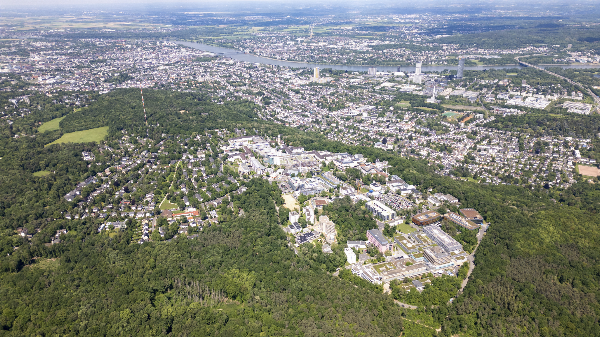
Venusberg-Campus 1
53127 Bonn
Phone:
0228-287-0
Mail:
ed.nnobku@ofni
ed.nnobku@ofni
ed.nnobku@ofni
- Number of beds: 1.306
- Number of specialist departments: 28
- Number of inpatient cases: 54.560
- Number of partial inpatient cases: 2.625
- Number of outpatient cases: 483.832
- Hospital owners: Universitätsklinikum Bonn, AöR
- Type of provider: öffentlich
- University Hospital
- Medizinische Klinik und Poliklinik I - Allgemeine Innere Medizin mit den Schwerpunkten Gastroenterologie, Hepatologie, Nephrologie, Rheumatologie, Infektiologie, Endokrinologie, Diabetologie
- Klinik und Poliklinik für Hals-, Nasen- und Ohrenheilkunde
- Klinik und Poliklinik für Anästhesiologie und Operative Intensivmedizin
- Abteilung für Allgemeine Pädiatrie
- Abteilung für Neonatologie und Pädiatrische Intensivmedizin
- Abteilung für Kinderkardiologie
- Abteilung für Pädiatrische Hämatologie und Onkologie
- Klinik und Poliklinik für Neurologie
- Klinik und Poliklinik für Epileptologie
- Klinik und Poliklinik für Neurochirurgie
- Frauenheilkunde und Gynäkologische Onkologie, Senologie, Gynäkologische Endokrinologie und Reproduktionsmedizin
- Medizinische Klinik und Poliklinik II - Innere Medizin mit den Schwerpunkten Kardiologie, Angiologie, Pneumologie
- Abteilung für Geburtshilfe und Pränatale Medizin
- Klinik und Poliklinik für Mund-, Kiefer- und plastische Gesichtschirurgie
- Klinik und Poliklinik für Dermatologie und Allergologie
- Klinik und Poliklinik für Nuklearmedizin
- Radiologie, Neuroradiologie, Strahlentherapie und Radioonkologie
- Klinik und Poliklinik für Psychiatrie und Psychotherapie
- Klinik und Poliklinik für Psychosomatische Medizin und Psychotherapie
- Institut für Experimentelle Hämatologie und Transfusionsmedizin
- Palliativmedizin
- Medizinische Klinik und Poliklinik III - Hämatologie, Onkologie
- Klinik und Poliklinik für Allgemein-, Viszeral-, Thorax- und Gefäßchirurgie
- Klinik und Poliklinik für Herzchirurgie; Abteilung für Kinderherzchirurgie
- Klinik und Poliklinik für Urologie und Kinderurologie
- Klinik für Orthopädie und Unfallchirurgie - Orthopädie
- Klinik für Orthopädie und Unfallchirurgie - Unfallchirurgie
- Augenklinik und Poliklinik
Further information
- External quality assurance according to state law
No participation
Koronare Herzkrankheit (KHK)
| Quantity performed | 55 |
| Exception? | No exception |
| Quantity performed | 359 |
| Exception? | No exception |
| Quantity performed | 146 |
| Exception? | No exception |
| Quantity performed | 19 |
| Exception? | No exception |
| Quantity performed | 64 |
| Exception? | No exception |
| Quantity performed | 20 |
| Exception? | No exception |
| Quantity performed | 19 |
| Exception? | No exception |
| Das UKB geht langfristig von einer positiven Entwicklung der Fallzahlen aus. Die Leistungsgruppe Nierentransplantation wurde dem UKB in 2024 zugewiesen. | |
| Quantity performed | 75 |
| Exception? | No exception |
| Quantity performed | 41 |
| Exception? | No exception |
| Overall result forecast presentation: | yes |
| Quantity performed reporting year: | 55 |
| Quantity forecast year: | 52 |
| Examination by state associations? | yes |
| Exemption? | yes |
| Result of the examination by the federal state authorities? | yes |
| Transitional arrangement? | no |
| Overall result forecast presentation: | yes |
| Quantity performed reporting year: | 359 |
| Quantity forecast year: | 327 |
| Examination by state associations? | yes |
| Exemption? | yes |
| Result of the examination by the federal state authorities? | yes |
| Transitional arrangement? | no |
| Overall result forecast presentation: | yes |
| Quantity performed reporting year: | 146 |
| Quantity forecast year: | 158 |
| Examination by state associations? | yes |
| Exemption? | yes |
| Result of the examination by the federal state authorities? | yes |
| Transitional arrangement? | no |
| Overall result forecast presentation: | yes |
| Quantity performed reporting year: | 19 |
| Quantity forecast year: | 26 |
| Examination by state associations? | yes |
| Exemption? | yes |
| Result of the examination by the federal state authorities? | yes |
| Transitional arrangement? | no |
| Overall result forecast presentation: | yes |
| Quantity performed reporting year: | 64 |
| Quantity forecast year: | 66 |
| Examination by state associations? | yes |
| Exemption? | yes |
| Result of the examination by the federal state authorities? | yes |
| Transitional arrangement? | no |
| Overall result forecast presentation: | yes |
| Quantity performed reporting year: | 20 |
| Quantity forecast year: | 23 |
| Examination by state associations? | yes |
| Exemption? | yes |
| Result of the examination by the federal state authorities? | yes |
| Transitional arrangement? | no |
| Overall result forecast presentation: | Pending lawsuit |
| Quantity performed reporting year: | 19 |
| Quantity forecast year: | 14 |
| Examination by state associations? | Pending lawsuit |
| Exemption? | yes |
| Result of the examination by the federal state authorities? | no |
| Transitional arrangement? | no |
| Overall result forecast presentation: | yes |
| Quantity performed reporting year: | 75 |
| Quantity forecast year: | 92 |
| Examination by state associations? | yes |
| Exemption? | yes |
| Result of the examination by the federal state authorities? | yes |
| Transitional arrangement? | no |
| Overall result forecast presentation: | yes |
| Quantity performed reporting year: | 41 |
| Quantity forecast year: | 55 |
| Examination by state associations? | yes |
| Exemption? | yes |
| Result of the examination by the federal state authorities? | yes |
| Transitional arrangement? | no |
| No. | Explanation |
|---|---|
| CQ01 | Quality assurance measures for inpatient care with the indication abdominal aortic aneurysm |
| CQ02 | Quality assurance measures for the inpatient care of children and adolescents with haemato-oncological diseases |
| CQ05 | Measures for quality assurance in the care of pre-term and full-term neonates – Perinatal Centre LEVEL 1 |
| CQ08 | Measures for quality assurance of cardiac surgery care in children and adolescents according to Article 136, para. 1, sentence 1, no. 2 of the SGB V |
| CQ24 | Quality assurance measures for allogeneic stem cell transplantation for multiple myeloma (valid until 30 June 2022) |
| CQ25 | Measures for quality assurance in the performance of minimally invasive heart valve interventions pursuant to Article 136, para. 1, sentence 1, number 2 for hospitals licensed in accordance with Article 108 of the SGB V |
| CQ27 | Guideline on quality assurance measures for inpatient care with bronchoscopic lung volume reduction procedures for severe emphysema (QS Guideline bronchoscopic LVR /QS-RL BLVR) |
| CQ28 | Guideline on quality assurance measures for liposuction procedures for stage III lipedema (QS-RL Liposuction) |
| CQ03 | Quality assurance measures for the implementation of positron emission tomography (PET) in hospitals for the indications non-small-cell lung cancer (NSCLC) and solid pulmonary nodules |
| CQ29 | Measures for quality assurance of allogeneic stem cell transplantation with in-vitro processing (T-cell depletion via positive enrichment or negative selection) of the transplant in acute lymphoblastic leukaemia (ALL) and acute myeloid leukaemia (AML) in adults |
| CQ31 | Guideline for the care of proximal femur fractures (QSFFx-RL) |
- Clarifying chat completed: no
- Clarifying chat not completed: no
- No participation in clarifying chat: no
- Notification of non-fulfilment of nursing care not made: yes
quarter Q1
Erwachsenenpsychiatrie
| Day shift | ||
|---|---|---|
| Compliance with minimum requirements | yes | |
| Level of implementation | 90,0 % | |
| Occupational group | Minimum requirements met | Level of implementation (%) |
| Ärztinnen und Ärzte, ärztliche Psychotherapeutinnen und Psychotherapeuten | ja | 103,19 % |
| Pflegefachpersonen | nein | 83,08 % |
| Psychotherapeutinnen und Psychotherapeuten (ohne ärztliche Psychotherapeutinnen und Psychotherapeuten), Psychologinnen und Psychologen | ja | 100,38 % |
| Spezialtherapeutinnen und Spezialtherapeuten | nein | 84,92 % |
| Bewegungstherapeutinnen und Bewegungstherapeuten, Physiotherapeutinnen und Physiotherapeuten | ja | 194,44 % |
| Sozialarbeiterinnen und Sozialarbeiter, Sozialpädagoginnen und Sozialpädagogen, Heilpädagoginnen und Heilpädagogen | ja | 107,29 % |
| Night shift | ||
| Compliance with minimum requirements | no | |
| Minimum requirement (full-time staff) | 109 | |
| Current staffing levels (full-time staff) | 123 | |
| Number of nights, subject to the minimum requirement | 91 | |
Psychosomatik
| Day shift | ||
|---|---|---|
| Compliance with minimum requirements | yes | |
| Level of implementation | 124,0 % | |
| Occupational group | Minimum requirements met | Level of implementation (%) |
| Ärztinnen und Ärzte, ärztliche Psychotherapeutinnen und Psychotherapeuten | ja | 199,64 % |
| Pflegefachpersonen | ja | 155,72 % |
| Psychotherapeutinnen und Psychotherapeuten (ohne ärztliche Psychotherapeutinnen und Psychotherapeuten), Psychologinnen und Psychologen | nein | 34,53 % |
| Spezialtherapeutinnen und Spezialtherapeuten | nein | 29,9 % |
| Bewegungstherapeutinnen und Bewegungstherapeuten, Physiotherapeutinnen und Physiotherapeuten | nein | 58,27 % |
| Sozialarbeiterinnen und Sozialarbeiter, Sozialpädagoginnen und Sozialpädagogen, Heilpädagoginnen und Heilpädagogen | nein | 0 % |
quarter Q2
Erwachsenenpsychiatrie
| Day shift | ||
|---|---|---|
| Compliance with minimum requirements | yes | |
| Level of implementation | 89,0 % | |
| Occupational group | Minimum requirements met | Level of implementation (%) |
| Ärztinnen und Ärzte, ärztliche Psychotherapeutinnen und Psychotherapeuten | ja | 104,75 % |
| Pflegefachpersonen | nein | 85,93 % |
| Psychotherapeutinnen und Psychotherapeuten (ohne ärztliche Psychotherapeutinnen und Psychotherapeuten), Psychologinnen und Psychologen | nein | 78,09 % |
| Spezialtherapeutinnen und Spezialtherapeuten | nein | 77,91 % |
| Bewegungstherapeutinnen und Bewegungstherapeuten, Physiotherapeutinnen und Physiotherapeuten | ja | 151,79 % |
| Sozialarbeiterinnen und Sozialarbeiter, Sozialpädagoginnen und Sozialpädagogen, Heilpädagoginnen und Heilpädagogen | nein | 94,53 % |
| Night shift | ||
| Compliance with minimum requirements | no | |
| Minimum requirement (full-time staff) | 111 | |
| Current staffing levels (full-time staff) | 125 | |
| Number of nights, subject to the minimum requirement | 91 | |
Psychosomatik
| Day shift | ||
|---|---|---|
| Compliance with minimum requirements | yes | |
| Level of implementation | 150,0 % | |
| Occupational group | Minimum requirements met | Level of implementation (%) |
| Ärztinnen und Ärzte, ärztliche Psychotherapeutinnen und Psychotherapeuten | ja | 231,35 % |
| Pflegefachpersonen | ja | 138,73 % |
| Psychotherapeutinnen und Psychotherapeuten (ohne ärztliche Psychotherapeutinnen und Psychotherapeuten), Psychologinnen und Psychologen | nein | 35,38 % |
| Spezialtherapeutinnen und Spezialtherapeuten | ja | 190,68 % |
| Bewegungstherapeutinnen und Bewegungstherapeuten, Physiotherapeutinnen und Physiotherapeuten | nein | 55,44 % |
| Sozialarbeiterinnen und Sozialarbeiter, Sozialpädagoginnen und Sozialpädagogen, Heilpädagoginnen und Heilpädagogen | ja | 219 % |
quarter Q3
No evidence of compliance has been provided
quarter Q4
Erwachsenenpsychiatrie
| Day shift | ||
|---|---|---|
| Compliance with minimum requirements | yes | |
| Level of implementation | 89,0 % | |
| Occupational group | Minimum requirements met | Level of implementation (%) |
| Ärztinnen und Ärzte, ärztliche Psychotherapeutinnen und Psychotherapeuten | ja | 101,02 % |
| Pflegefachpersonen | nein | 89,54 % |
| Psychotherapeutinnen und Psychotherapeuten (ohne ärztliche Psychotherapeutinnen und Psychotherapeuten), Psychologinnen und Psychologen | nein | 79,98 % |
| Spezialtherapeutinnen und Spezialtherapeuten | nein | 79,6 % |
| Bewegungstherapeutinnen und Bewegungstherapeuten, Physiotherapeutinnen und Physiotherapeuten | ja | 102,91 % |
| Sozialarbeiterinnen und Sozialarbeiter, Sozialpädagoginnen und Sozialpädagogen, Heilpädagoginnen und Heilpädagogen | nein | 76,05 % |
| Night shift | ||
| Compliance with minimum requirements | no | |
| Minimum requirement (full-time staff) | 111 | |
| Current staffing levels (full-time staff) | 122 | |
| Number of nights, subject to the minimum requirement | 92 | |
Psychosomatik
| Day shift | ||
|---|---|---|
| Compliance with minimum requirements | yes | |
| Level of implementation | 143,0 % | |
| Occupational group | Minimum requirements met | Level of implementation (%) |
| Ärztinnen und Ärzte, ärztliche Psychotherapeutinnen und Psychotherapeuten | ja | 186,32 % |
| Pflegefachpersonen | ja | 153,56 % |
| Psychotherapeutinnen und Psychotherapeuten (ohne ärztliche Psychotherapeutinnen und Psychotherapeuten), Psychologinnen und Psychologen | nein | 35,64 % |
| Spezialtherapeutinnen und Spezialtherapeuten | ja | 122,49 % |
| Bewegungstherapeutinnen und Bewegungstherapeuten, Physiotherapeutinnen und Physiotherapeuten | ja | 128,99 % |
| Sozialarbeiterinnen und Sozialarbeiter, Sozialpädagoginnen und Sozialpädagogen, Heilpädagoginnen und Heilpädagogen | ja | 261,18 % |
| Number | Group |
|---|---|
| 1492 | Medical specialists (m/f) , psychological psychotherapists (m/f) and child and adolescent psychotherapists (m/f) who are subject to the obligation to undergo further training* |
| 750 | Number of medical specialists (m/f) from no. 1 who have completed a five-year period of further training and are therefore subject to the obligation to provide evidence |
| 431 | Number of those persons from no. 2 who have provided proof of further training according to Article 3 of the G-BA regulations |
According to Section 4 (2) of the Quality Management Guideline, facilities must provide for the prevention of and intervention in cases of violence and abuse as part of their internal quality management. The aim is to prevent, recognise and respond appropriately to abuse and violence, particularly against vulnerable patient groups such as children and adolescents or people in need of help, and also to prevent it within the facility. The respective procedure is aligned with the size of the facility, the range of services and the patients in order to define customised solutions for sensitising the teams as well as other suitable preventative and interventional measures. These may include information materials, contact addresses, training/education, codes of conduct, recommendations for action/intervention plans or comprehensive protection concepts.
- Is a protection concept in place? No
- No care for children and young people
- Die derzeitige Arbeit im Kinderschutz bezieht sich auf die Diagnostik, Behandlung und Versorgung von Kindern, die Opfer von (sexueller) Gewalt wurden und in der Klinik vorgestellt werden. Darunter fällt auch die Akkreditierung als Kinderschutzgruppe, die regelmäßige Schulung von Mitarbeitenden, die Fortbildung von Personal in diesem Bereich. Auch bzgl. der Erstellung von Schutzkonzepten für den Schutz von Kindern in unserer Klinik gibt es Expertise, allerdings kein ausgearbeitetes Schutzkonzept.
- Drug commission
Training of employees on AMTS related topics
Availability of appropriate, topic-specific informational materials for patients on AMTS e.g. for chronic diseases, for high-risk drugs, for children
Teil des Anamnesebogens
01.01.2019
Electronic support for the admission and anamnesis process (e.g. import of patient master data or medication plans, use of a drug knowledge database, input screen for drugs or anamnesis information)
Elektronische Verordnungssysteme
01.01.2019
Possibility of electronic prescription i.e. structured entry of active substances (or name of the preparation), form, dose, dose frequency (e.g. in the HIS, in prescription software)
Provision of one or more electronic drug information systems (e.g. Lauer-Taxe®, ifap klinikCenter®, Gelbe Liste®, Fachinfo-Service®)
- Zubereitung durch pharmazeutisches Personal
- Anwendung von gebrauchsfertigen Arzneimitteln bzw. Zubereitungen
- Vorhandensein von elektronischen Systemen zur Entscheidungsunterstützung (z.B. Meona®, Rpdoc®, AIDKlinik®, ID Medics® bzw. ID Diacos® Pharma)
- Versorgung der Patientinnen und Patienten mit patientenindividuell abgepackten Arzneimitteln durch die Krankenhausapotheke (z.B. Unit-Dose-System)
Electronic documentation of the administration of drugs
- Fallbesprechungen
- Maßnahmen zur Vermeidung von Arzneimittelverwechslung
- Spezielle AMTS-Visiten (z. B. pharmazeutische Visiten, antibiotic stewardship, Ernährung)
- Teilnahme an einem einrichtungsübergreifenden Fehlermeldesystem (siehe Kapitel 12.2.3.2)
- Aushändigung von arzneimittelbezogenen Informationen für die Weiterbehandlung und Anschlussversorgung der Patientin oder des Patienten im Rahmen eines (ggf. vorläufigen) Entlassbriefs
- Aushändigung von Patienteninformationen zur Umsetzung von Therapieempfehlungen
- Aushändigung des Medikationsplans
- bei Bedarf Arzneimittel-Mitgabe oder Ausstellung von Entlassrezepten
- Admission to hospital, including anamnesis
; Instruments and measures are presented for determining the old medication (drug history), the subsequent clinical assessment and the switch to the medication available in the hospital (house list), as well as for documenting both the patient's original medication and that for hospital treatment adapted medication.
- Medication process in the hospital
In this context, the following sub-processes are assumed as examples: drug history - prescription - patient information - drug delivery - drug use - documentation - therapy monitoring - result assessment. Instruments and measures for safe medication prescription can be presented, e.g. B. in terms of readability, clarity and completeness of the documentation, but also in terms of area of application, effectiveness, benefit-risk ratio, tolerability (including potential contraindications, interactions, etc.) and resource considerations. Information can also be provided to support reliable medication ordering, delivery and use or administration.
- Discharge
In particular, the measures taken by hospitals can be presented to ensure that information on drug therapy is structured and passed on to doctors and physicians providing further treatment, as well as the appropriate provision of patients with drug information, medication plans and medications. Drug prescriptions are made.
Job
FL09 - Doctoral supervision
Explanation
FL01 - Lectureships / teaching posts at colleges and universities
Explanation
FL08 - Editors of scientific journals/textbooks
Explanation
FL07 - Initiation and management of uni-centric/multi-centric clinical/scientific studies
Explanation
FL04 - Project-related cooperation with colleges and universities
Explanation
FL03 - Student training (clinical traineeship / internship year)
Explanation
FL05 - Participation in multi-centre Phase I/II studies
Explanation
FL06 - Participation in multi-centre phase III/IV studies
Explanation
FL02 - Lectureships / teaching posts at universities of applied sciences
Explanation
Training in other healing professions
Comment
3-jährige Ausbildung.
Comment
3-jährige Ausbildung.
HB05 - Medical technical radiology assistant (MTRA) (m/f)
Comment
HB07 - Surgical technical assistant (m/f)
Comment
HB10 - Midwife (m/f)
Comment
HB12 - Medical technical laboratory assistant (MTLA) (m/f)
Comment
Comment
Vollständige Berufsausbildung zu Orthoptist und Orthoptistin in 3-Jahres-Curriculum.
HB15 - Anaesthesia technical assistant (m/f)
Comment
Comment
1-jährige Ausbildung.
Comment
3-jährige Ausbildung.
- Hospital staff
- Number of pharmacists: 9
- Additional staff: 15
- Explanations: Eigene Krankenhausapotheke. 1,5 Stellenanteile zur Arbeit auf Station (Stationsapothekerinnen).
Prof. Dr. med. Udo Bode
Patientenfürsprecher
Venusberg-Campus 1
53127 Bonn
Phone:
0228
-287-33110
Mail:
ed.nnobku@edob.odu
Maren Pausch
Lob- und Beschwerdemanagement
Venusberg-Campus 1
53127 Bonn
Phone:
0228
-287-13030
Mail:
ed.nnobku@edrewhcsebdnubol
Julie Danto
Vertretung im Lob- und Beschwerdemanagement
Venusberg-Campus 1
53127 Bonn
Phone:
0228
-287-13030
Mail:
ed.nnobku@edrewhcsebdnubol
Miriam Buchhorn
Abteilungsleiterin
Venusberg-Campus 1
53127 Bonn
Phone:
0228
-287-13546
Mail:
ed.nnobku@nrohhcub.mairim
Holger Mack
Inklusionsbeauftragter
Venusberg-Campus 1
53127 Bonn
Phone:
0228
-287-51726
Mail:
ed.nnobku@retgartfuaebsnoisulknI
53127 Bonn
Phone:
0228-287-0
Mail:
ed.nnobku@ofni
Alexander Pröbstl
Pflegedirektor
Venusberg-Campus 1
53127 Bonn
Phone:
0228
-287-16671
Mail:
ed.nnobku@noitkeridegelfp
Clemens Platzköster
Kaufmännischer Direktor und Stellv. Vorstandsvorsitzender
Venusberg-Campus 1
53127 Bonn
Phone:
0228
-287-14040
Mail:
ed.nnobku@retseokztalp.snemelc
Univ.-Prof. Dr. med. Alexandra Philipsen
Komm. Ärztliche Direktorin und Vorstandsmitglied
Venusberg-Campus 1
53127 Bonn
Phone:
0228
-287-10901
Mail:
ed.nnobku@noitkeriDehciltzreA
Univ.-Prof. Dr. med. Alexandra Philipsen
Komm. Ärztliche Direktorin und Vorstandsmitglied
Venusberg-Campus 1
53127 Bonn
Phone:
0228
-287-10901
Mail:
ed.nnobku@noitkeriDehciltzreA
IK: 260530103
Location number: 772247000
Chest Pain Unit
Certified until: 09.2028
EMAH-Zentrum
Certified until: 11.2029
Heart Failure Unit
Certified until: 12.2026
TAVI
Certified until: 09.2028
Cardiac Arrest Center
Certified until: 12.2025
Wirbelsäulenzentrum
Certified until: 12.2025
Cochlea-Implantat (CI)-versorgende Einrichtung
Certified until: 08.2027
Stroke Unit
Certified until: 09.2027
Neurovaskuläres Netzwerk
Certified until: 12.2025
Nationales Zentrum für Uterine Sarkome
Certified until: 01.2026
Brustzentrum ÄKZert
Certified until: 11.2027
DGP Palliativmedizin
Certified until: 12.2026
Zentrum für seltene Erkrankungen
Certified until: 03.2027
DeGIR Zentrum
Certified until: 12.2027
DRG-Zentrum für kardiovaskuläre Bildgebung
Certified until: 12.2025
DRG-Zentrum für Muskulostekelettale Radiologie
Certified until: 12.2029
Brustkrebszentrum im CIO
Certified until: 03.2026
Darmkrebszentrum im CIO
Certified until: 03.2028
Gynäkologisches Krebszentrum im CIO
Certified until: 03.2026
Zentrum für Hämatologische Neoplasien im CIO
Certified until: 03.2028
Uroonkologisches Zentrum im CIO
Certified until: 03.2028
Harnblasenkrebszentrum im CIO
Certified until: 03.2028
Hauttumorzentru im CIO
Certified until: 03.2028
Hodenkrebszentrum im CIO
Certified until: 03.2028
Kinderonkologisches Zentrum im CIO
Certified until: 03.2028
Kopf-Hals-Tumor-Zentrum im CIO
Certified until: 03.2028
Leberkrebszentrum im CIO
Certified until: 03.2028
Lungenkrebszentrum im CIO
Certified until: 03.2028
Neuroonkologisches Zentrum im CIO
Certified until: 03.2028
Nierenkrebszentrum im CIO
Certified until: 03.2028
Onkologisches Zentrum im CIO
Certified until: 03.2028
Pankreaskarzionomzentrum im CIO
Certified until: 03.2028
Prostatatkrebszentrum im CIO
Certified until: 03.2028
Speiseröhrenkrebszentrum im CIO
Certified until: 03.2028
Viszeralonkologisches Zentrum
Certified until: 03.2028
Zentrum für personalisierte Medizin - Onkologie im CIO
Certified until: 03.2027
AltersTraumaZentrum
Certified until: 12.2027
Brustkrebszentrum
Certified until: 03.2027
Brustkrebszentrum in NRW
Certified until: 11.2027
Chest Pain Unit
Certified until: 09.2028
Cochlea-Implantat versorgende Einrichtung
Certified until: 08.2027
Darmkrebszentrum
Certified until: 03.2028
Gynäkologisches Krebszentrum
Certified until: 03.2027
Harnblasenkrebszentrum
Certified until: 03.2028
Hautkrebszentrum
Certified until: 03.2028
Hodenkrebszentrum
Certified until: 03.2028
Kinderonkologisches Zentrum
Certified until: 03.2028
Kopf-Hals-Tumor-Zentrum
Certified until: 03.2028
Leberkrebszentrum
Certified until: 03.2028
Lungenkrebszentrum
Certified until: 03.2028
Minimalinvasive Chirurgie
Certified until: 08.2026
Neuroonkologisches Zentrum
Certified until: 03.2028
Nierenkrebszentrum
Certified until: 03.2028
Onkologisches Zentrum
Certified until: 03.2028
Palliativstation
Certified until: 12.2026
Pankreaskrebszentrum
Certified until: 03.2028
Peniskrebszentrum
Certified until: 03.2028
Prostatakrebszentrum
Certified until: 03.2028
Schlaflabor
Certified until: 12.2026
Speiseröhrenkrebszentrum
Certified until: 03.2028
Stroke Unit
Certified until: 09.2027
Überregionales Heart Failure Unit-Zentrum
Certified until: 12.2026
Zentren für Seltene Erkrankungen
Certified until: 03.2027
Zentrum für Hämatologische Neoplasien
Certified until: 03.2028
Zentrum für Personalisierte Medizin
Certified until: 03.2027