
Oberhavel Kliniken GmbH / Klinik Hennigsdorf
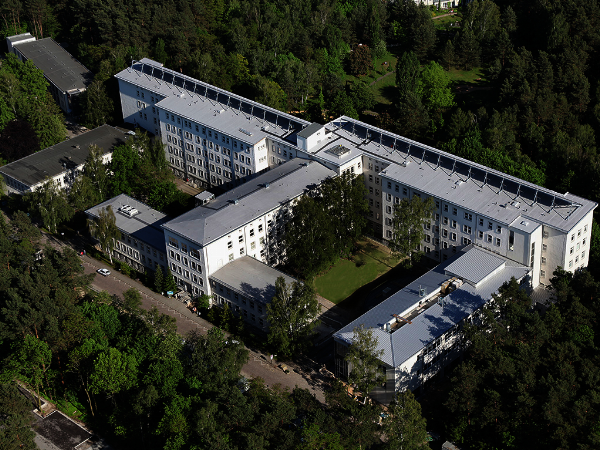
Marwitzer Straße 91
16761 Hennigsdorf
Phone:
03302-545-0
Mail:
ed.nekinilk-levahrebo@kinilk
ed.nekinilk-levahrebo@kinilk
ed.nekinilk-levahrebo@kinilk
- Number of beds: 458
- Number of specialist departments: 11
- Number of inpatient cases: 14.473
- Number of outpatient cases: 35.213
- Hospital owners: Oberhavel Kliniken GmbH
- Type of provider: öffentlich
- Academic teaching hospital
- Akademisches Lehrkrankenhaus der Charité Universitätsmedizin Campus Benjamin Franklin
- Fachabteilung für Innere Medizin
- Abteilung für Psychiatrie und Psychotherapie
- Abteilung für Psychosomatische Medizin und Psychotherapie
- Fachabteilung für Chirurgie/Unfallchirurgie
- Fachabteilung für Gefäßchirurgie
- Fachabteilung für Anästhesiologie und Intensivmedizin
- Fachabteilung für Neurologie
- Fachabteilung für Hals-, Nasen-, Ohrenheilkunde
- Fachabteilung für Geriatrie
- Palliativmedizin
- Fachabteilung für Radiologie
Further information
- External quality assurance according to state law
No participation
Koronare Herzkrankheit (KHK)
Seit Oktober 2004 nimmt die Oberhavel Kliniken GmbH, Standort Hennigsdorf am DMP Koronare Herzerkrankungen teil. Durch die Kooperation mit dem Herzzentrum in Bernau, das über eine kardiochirurgische Abteilung verfügt, konnte ein kurzes Zeitfenster für einen eventuellen operativen Eingriff am Herzen geschaffen werden.
- Implementation of the minimum quantity agreement
No participation
| No. | Explanation |
|---|---|
| CQ01 | Quality assurance measures for inpatient care with the indication abdominal aortic aneurysm |
| CQ31 | Guideline for the care of proximal femur fractures (QSFFx-RL) |
- Clarifying chat completed: no
- Clarifying chat not completed: no
- No participation in clarifying chat: no
- Notification of non-fulfilment of nursing care not made: no
quarter Q1
Erwachsenenpsychiatrie
| Day shift | ||
|---|---|---|
| Compliance with minimum requirements | yes | |
| Level of implementation | 101,0 % | |
| Occupational group | Minimum requirements met | Level of implementation (%) |
| Ärztinnen und Ärzte, ärztliche Psychotherapeutinnen und Psychotherapeuten | ja | 116,76 % |
| Pflegefachpersonen | nein | 90,48 % |
| Psychotherapeutinnen und Psychotherapeuten (ohne ärztliche Psychotherapeutinnen und Psychotherapeuten), Psychologinnen und Psychologen | ja | 131,71 % |
| Spezialtherapeutinnen und Spezialtherapeuten | ja | 115,36 % |
| Bewegungstherapeutinnen und Bewegungstherapeuten, Physiotherapeutinnen und Physiotherapeuten | ja | 186,53 % |
| Sozialarbeiterinnen und Sozialarbeiter, Sozialpädagoginnen und Sozialpädagogen, Heilpädagoginnen und Heilpädagogen | ja | 103,49 % |
| Night shift | ||
| Compliance with minimum requirements | yes | |
| Minimum requirement (full-time staff) | 101 | |
| Current staffing levels (full-time staff) | 85 | |
| Number of nights, subject to the minimum requirement | 14 | |
Psychosomatik
| Day shift | ||
|---|---|---|
| Compliance with minimum requirements | no | |
| Level of implementation | 150,0 % | |
| Occupational group | Minimum requirements met | Level of implementation (%) |
| Ärztinnen und Ärzte, ärztliche Psychotherapeutinnen und Psychotherapeuten | ja | 149,04 % |
| Pflegefachpersonen | ja | 143,48 % |
| Psychotherapeutinnen und Psychotherapeuten (ohne ärztliche Psychotherapeutinnen und Psychotherapeuten), Psychologinnen und Psychologen | ja | 143,24 % |
| Spezialtherapeutinnen und Spezialtherapeuten | ja | 132,12 % |
| Bewegungstherapeutinnen und Bewegungstherapeuten, Physiotherapeutinnen und Physiotherapeuten | ja | 265,23 % |
| Sozialarbeiterinnen und Sozialarbeiter, Sozialpädagoginnen und Sozialpädagogen, Heilpädagoginnen und Heilpädagogen | ja | 146,66 % |
quarter Q2
Erwachsenenpsychiatrie
| Day shift | ||
|---|---|---|
| Compliance with minimum requirements | no | |
| Level of implementation | 102,0 % | |
| Occupational group | Minimum requirements met | Level of implementation (%) |
| Ärztinnen und Ärzte, ärztliche Psychotherapeutinnen und Psychotherapeuten | ja | 108,93 % |
| Pflegefachpersonen | ja | 95,26 % |
| Psychotherapeutinnen und Psychotherapeuten (ohne ärztliche Psychotherapeutinnen und Psychotherapeuten), Psychologinnen und Psychologen | ja | 125,09 % |
| Spezialtherapeutinnen und Spezialtherapeuten | ja | 116,39 % |
| Bewegungstherapeutinnen und Bewegungstherapeuten, Physiotherapeutinnen und Physiotherapeuten | ja | 205,6 % |
| Sozialarbeiterinnen und Sozialarbeiter, Sozialpädagoginnen und Sozialpädagogen, Heilpädagoginnen und Heilpädagogen | ja | 96,43 % |
| Night shift | ||
| Compliance with minimum requirements | yes | |
| Minimum requirement (full-time staff) | 101 | |
| Current staffing levels (full-time staff) | 83 | |
| Number of nights, subject to the minimum requirement | 0 | |
Psychosomatik
| Day shift | ||
|---|---|---|
| Compliance with minimum requirements | no | |
| Level of implementation | 148,0 % | |
| Occupational group | Minimum requirements met | Level of implementation (%) |
| Ärztinnen und Ärzte, ärztliche Psychotherapeutinnen und Psychotherapeuten | ja | 151,46 % |
| Pflegefachpersonen | ja | 146,66 % |
| Psychotherapeutinnen und Psychotherapeuten (ohne ärztliche Psychotherapeutinnen und Psychotherapeuten), Psychologinnen und Psychologen | ja | 151,18 % |
| Spezialtherapeutinnen und Spezialtherapeuten | ja | 112,1 % |
| Bewegungstherapeutinnen und Bewegungstherapeuten, Physiotherapeutinnen und Physiotherapeuten | ja | 228,78 % |
| Sozialarbeiterinnen und Sozialarbeiter, Sozialpädagoginnen und Sozialpädagogen, Heilpädagoginnen und Heilpädagogen | ja | 136,29 % |
quarter Q3
Erwachsenenpsychiatrie
| Day shift | ||
|---|---|---|
| Compliance with minimum requirements | no | |
| Level of implementation | 97,0 % | |
| Occupational group | Minimum requirements met | Level of implementation (%) |
| Ärztinnen und Ärzte, ärztliche Psychotherapeutinnen und Psychotherapeuten | ja | 104,48 % |
| Pflegefachpersonen | ja | 90,12 % |
| Psychotherapeutinnen und Psychotherapeuten (ohne ärztliche Psychotherapeutinnen und Psychotherapeuten), Psychologinnen und Psychologen | ja | 120,67 % |
| Spezialtherapeutinnen und Spezialtherapeuten | ja | 110,73 % |
| Bewegungstherapeutinnen und Bewegungstherapeuten, Physiotherapeutinnen und Physiotherapeuten | ja | 148,7 % |
| Sozialarbeiterinnen und Sozialarbeiter, Sozialpädagoginnen und Sozialpädagogen, Heilpädagoginnen und Heilpädagogen | ja | 102,03 % |
| Night shift | ||
| Compliance with minimum requirements | yes | |
| Minimum requirement (full-time staff) | 101 | |
| Current staffing levels (full-time staff) | 85 | |
| Number of nights, subject to the minimum requirement | 0 | |
Psychosomatik
| Day shift | ||
|---|---|---|
| Compliance with minimum requirements | no | |
| Level of implementation | 141,0 % | |
| Occupational group | Minimum requirements met | Level of implementation (%) |
| Ärztinnen und Ärzte, ärztliche Psychotherapeutinnen und Psychotherapeuten | ja | 145,77 % |
| Pflegefachpersonen | ja | 138,72 % |
| Psychotherapeutinnen und Psychotherapeuten (ohne ärztliche Psychotherapeutinnen und Psychotherapeuten), Psychologinnen und Psychologen | ja | 138,83 % |
| Spezialtherapeutinnen und Spezialtherapeuten | ja | 117,79 % |
| Bewegungstherapeutinnen und Bewegungstherapeuten, Physiotherapeutinnen und Physiotherapeuten | ja | 180,16 % |
| Sozialarbeiterinnen und Sozialarbeiter, Sozialpädagoginnen und Sozialpädagogen, Heilpädagoginnen und Heilpädagogen | ja | 150,6 % |
quarter Q4
Erwachsenenpsychiatrie
| Day shift | ||
|---|---|---|
| Compliance with minimum requirements | yes | |
| Level of implementation | 90,0 % | |
| Occupational group | Minimum requirements met | Level of implementation (%) |
| Ärztinnen und Ärzte, ärztliche Psychotherapeutinnen und Psychotherapeuten | ja | 98,37 % |
| Pflegefachpersonen | nein | 83,11 % |
| Psychotherapeutinnen und Psychotherapeuten (ohne ärztliche Psychotherapeutinnen und Psychotherapeuten), Psychologinnen und Psychologen | ja | 111,18 % |
| Spezialtherapeutinnen und Spezialtherapeuten | ja | 103,17 % |
| Bewegungstherapeutinnen und Bewegungstherapeuten, Physiotherapeutinnen und Physiotherapeuten | ja | 158,68 % |
| Sozialarbeiterinnen und Sozialarbeiter, Sozialpädagoginnen und Sozialpädagogen, Heilpädagoginnen und Heilpädagogen | ja | 95,72 % |
| Night shift | ||
| Compliance with minimum requirements | yes | |
| Minimum requirement (full-time staff) | 101 | |
| Current staffing levels (full-time staff) | 84 | |
| Number of nights, subject to the minimum requirement | 0 | |
Psychosomatik
| Day shift | ||
|---|---|---|
| Compliance with minimum requirements | no | |
| Level of implementation | 136,0 % | |
| Occupational group | Minimum requirements met | Level of implementation (%) |
| Ärztinnen und Ärzte, ärztliche Psychotherapeutinnen und Psychotherapeuten | ja | 164,06 % |
| Pflegefachpersonen | ja | 128,78 % |
| Psychotherapeutinnen und Psychotherapeuten (ohne ärztliche Psychotherapeutinnen und Psychotherapeuten), Psychologinnen und Psychologen | ja | 121,2 % |
| Spezialtherapeutinnen und Spezialtherapeuten | ja | 92,86 % |
| Bewegungstherapeutinnen und Bewegungstherapeuten, Physiotherapeutinnen und Physiotherapeuten | ja | 170,44 % |
| Sozialarbeiterinnen und Sozialarbeiter, Sozialpädagoginnen und Sozialpädagogen, Heilpädagoginnen und Heilpädagogen | ja | 142,37 % |
Full record of compliance maintained
| Number of days shown | 366 |
| Days of non-performance | 0 |
| Number of minimum requirements not met | 0 |
General minimum requirements
| Minimum requirement | Days of non-performance |
|---|---|
| Trauma room | 0 |
| Availability | 0 |
| Computed tomography (CT) | 0 |
| Intensive care beds | 0 |
| Department of Surgery | 0 |
| Forwarding by air | 0 |
| Department of Internal Medicine | 0 |
| Intensive care beds with ventilator facilities | 0 |
| Emergency care training courses | 0 |
| Treatment prioritisation system (triage) | 0 |
| Responsibility for emergency care | 0 |
Specific minimum requirements
| Minimum requirement | Days of non-performance |
|---|---|
| Doctor on duty | 0 |
| Supervision by a medical specialist | 0 |
| Geriatric expertise | 0 |
| Operating room equipment | 0 |
| Post-operative physiotherapy | 0 |
| Independent organisational unit | 0 |
Minimum requirements for process quality
| Minimum requirement | Days of non-performance |
|---|---|
| SOP: Surgical procedures | 0 |
| SOP: Perioperative Planning | 0 |
| SOP: Capacity to consent | 0 |
| Standard Operating Procedure for the Management of Anticoagulants | 0 |
| SOP: Ortho-geriatric Care | 0 |
| SOP: Physiotherapy Measures | 0 |
| SOP: Patient-centred blood management | 0 |
| Number | Group |
|---|---|
| 92 | Medical specialists (m/f) , psychological psychotherapists (m/f) and child and adolescent psychotherapists (m/f) who are subject to the obligation to undergo further training* |
| 17 | Number of medical specialists (m/f) from no. 1 who have completed a five-year period of further training and are therefore subject to the obligation to provide evidence |
| 15 | Number of those persons from no. 2 who have provided proof of further training according to Article 3 of the G-BA regulations |
According to Section 4 (2) of the Quality Management Guideline, facilities must provide for the prevention of and intervention in cases of violence and abuse as part of their internal quality management. The aim is to prevent, recognise and respond appropriately to abuse and violence, particularly against vulnerable patient groups such as children and adolescents or people in need of help, and also to prevent it within the facility. The respective procedure is aligned with the size of the facility, the range of services and the patients in order to define customised solutions for sensitising the teams as well as other suitable preventative and interventional measures. These may include information materials, contact addresses, training/education, codes of conduct, recommendations for action/intervention plans or comprehensive protection concepts.
- Is a protection concept in place? Yes
- Measures
-
Prevention
Special requirements for the selection of persons
-
Intervention
- Note on the measure
Kinderschutzkonzept, Dok.-Nr. 17604
Arbeitsanweisung zum Vorgehen in Kinderschutzfällen, Dok.-Nr. 9158 - Last review of the measure
18.07.2023 19:29:25
- Note on the measure
-
Prevention
- Kinderschutzkonzept, Dok.-Nr. 17604 Arbeitsanweisung zum Vorgehen in Kinderschutzfällen, Dok.-Nr. 9158
- Name of the working group: Medikamenten-Audit
Training of employees on AMTS related topics
Electronic support for the admission and anamnesis process (e.g. import of patient master data or medication plans, use of a drug knowledge database, input screen for drugs or anamnesis information)
Possibility of electronic prescription i.e. structured entry of active substances (or name of the preparation), form, dose, dose frequency (e.g. in the HIS, in prescription software)
Provision of one or more electronic drug information systems (e.g. Lauer-Taxe®, ifap klinikCenter®, Gelbe Liste®, Fachinfo-Service®)
- elektronische Arzneimittelbestellung
Electronic documentation of the administration of drugs
- Maßnahmen zur Vermeidung von Arzneimittelverwechslung
- Spezielle AMTS-Visiten (z. B. pharmazeutische Visiten, antibiotic stewardship, Ernährung)
- Pflichtfortbildung zur Arzneimitteltherapiesicherheit für Ärzte
- Aushändigung von arzneimittelbezogenen Informationen für die Weiterbehandlung und Anschlussversorgung der Patientin oder des Patienten im Rahmen eines (ggf. vorläufigen) Entlassbriefs
- Aushändigung des Medikationsplans
- bei Bedarf Arzneimittel-Mitgabe oder Ausstellung von Entlassrezepten
- Admission to hospital, including anamnesis
; Instruments and measures are presented for determining the old medication (drug history), the subsequent clinical assessment and the switch to the medication available in the hospital (house list), as well as for documenting both the patient's original medication and that for hospital treatment adapted medication.
- Medication process in the hospital
In this context, the following sub-processes are assumed as examples: drug history - prescription - patient information - drug delivery - drug use - documentation - therapy monitoring - result assessment. Instruments and measures for safe medication prescription can be presented, e.g. B. in terms of readability, clarity and completeness of the documentation, but also in terms of area of application, effectiveness, benefit-risk ratio, tolerability (including potential contraindications, interactions, etc.) and resource considerations. Information can also be provided to support reliable medication ordering, delivery and use or administration.
- Discharge
In particular, the measures taken by hospitals can be presented to ensure that information on drug therapy is structured and passed on to doctors and physicians providing further treatment, as well as the appropriate provision of patients with drug information, medication plans and medications. Drug prescriptions are made.
Job
Explanation
Dr. Jockers-Scherübl: Hospip-Studie, STEM-Studie, Berliner Depressionsnetz, Charité-Haube-Studie. Dr. Minden: CABA-HFPEF, CRMI-ICD Trial 23, VICTORION und VICTORION IMPLEMENT, B2HIR-Herzinfarktregister
Explanation
Dr. Minden, Dr. Weber mit Charité: Psychische Beschwerdelast nach Akutem Koronarsyndrom. PD Dr. Jockers-Scherübl: wissenschaftl. Projekte mit Charité o. MHD, z.B. Arbeitsgr. Soteria; Dr. Magritz: Forschungsprojekt Uni Mannheim "Tissue Engeneering von Knorpelgewebe u. komplexen Organstrukturen"
Explanation
Als Akademisches Lehrkrankenhaus der Charité - Universitätsmedizin Berlin in allen Fachabteilungen angeboten.
Explanation
Priv.-Doz. Dr. med. Maria-Christiane Jockers-Scherübl mit Lehrverpfl. an d. Klinik u. Hochschulamb. für Psychiatrie u. Psychotherapie d. Charité. Dr. med. Cora S. Weber, Lehrverpfl. Modellstudieng., Psychosomat. Med. und Psychotherapie
Explanation
PD Dr. med. Maria Jockers-Scherübl: wissenschaftliche Publikationen, z.B. Gerontopsychiatrie, Depressionen, Sucht, Schizophrenie (Dr. Wolf); Dr. Ralph Magritz: Beteiligung an Fachbüchern: "Rekonstruktive Kopf-Hals-Chirurgie" und "Correcture and Reconstruction of the Auricle", beide Springer Verlag
Explanation
Prof. Schreiber 2 Promotionsprojekte im Bereich der neurologischen Ultraschalldiagnostik, PD Dr. med. Cora S. Weber im Bereich Psychokardiologie, Stressphysiologie. PD Dr. med. Maria Jockers-Scherübl der Medizin und der Psychologie
Training in other healing professions
HB03 - Physical therapist / physiotherapist (m/f)
Comment
HB17 - Auxiliary nurse (m/f)
Comment
HB05 - Medical technical radiology assistant (MTRA) (m/f)
Comment
HB07 - Surgical technical assistant (m/f)
Comment
HB12 - Medical technical laboratory assistant (MTLA) (m/f)
Comment
HB06 - Occupational therapist (m/f)
Comment
HB19 - Nursing professionals
Comment
- Hospital staff
- Number of pharmacists: 4
- Additional staff: 4
- Explanations: 1 beratende Apothekerin (Claudia Herholz) Standort: Oberhavel Kliniken GmbH Versorgungsapotheke Standort Sana Klinikum Lichtenberg: 3 Apotheker / 2 Pharmazieingenieure / 2 PTA
Pfarrer Friedemann Humburg
Patientenfürsprecher
Marwitzer Straße 91
16761 Hennigsdorf
Phone:
0151
-12439959-
Mail:
ed.bew@96uhf
Mitarbeiter Zentrales Beschwerdemanagement
Qualitätsmanagementbeauftragte
Marwitzer Straße 91
16761 Hennigsdorf
Phone:
03301
-66-3053
Mail:
ed.nekinilk-levahrebo@MQ
Frau Simone Janik
Qualitätsmanagementbeauftragte
Marwitzer Straße 91
16761 Hennigsdorf
Phone:
03301
-66-3053
Mail:
ed.nekinilk-levahrebo@MQ
Claudia Herholz
Apothekerin
Marwitzer Straße 91
16761 Hennigsdorf
Phone:
03301
-66-2983
Mail:
ed.nekinilk-levahrebo@zlohreH.aidualC
Arina Fath
Projektmanagement
Marwitzer Straße 91
16761 Hennigsdorf
Phone:
03301
-66-2970
Mail:
ed.nekinilk-levahrebo@htaf.anira
16761 Hennigsdorf
Phone:
03302-545-0
Mail:
ed.nekinilk-levahrebo@kinilk
Herr Richard Staar
Pflegedirektor
Marwitzer Straße 91
16761 Hennigsdorf
Phone:
03301
-66-2055
Mail:
ed.nekinilk-levahrebo@raats.drahcir
Prokuristin Wiebke Gröper
Prokuristin/Verwaltungsleiterin
Marwitzer Straße 91
16761 Hennigsdorf
Phone:
03301
-66-2016
Mail:
ed.nekinilk-levahrebo@kinilk
Dr. Detlef Troppens
Geschäftsführung
Marwitzer Straße 91
16761 Hennigsdorf
Phone:
03301
-66-2016
Mail:
ed.nekinilk-levahrebo@kinilk
PD Dr. med. Maria-Christiane Jockers-Scherübl
Leitende Chefärztin
Marwitzer Straße 91
16761 Hennigsdorf
Phone:
03302
-545-4211
Mail:
ed.nekinilk-levahrebo@kinilk
IK: 261200435
Location number: 771030000
AltersTraumaZentrum
Certified until: 11.2026
Chest Pain Unit
Certified until: 03.2029
Darmkrebszentrum
Certified until: 07.2028
Geriatrie
Certified until: 06.2026
Stroke Unit
Certified until: 08.2028