
Klinikum Esslingen GmbH
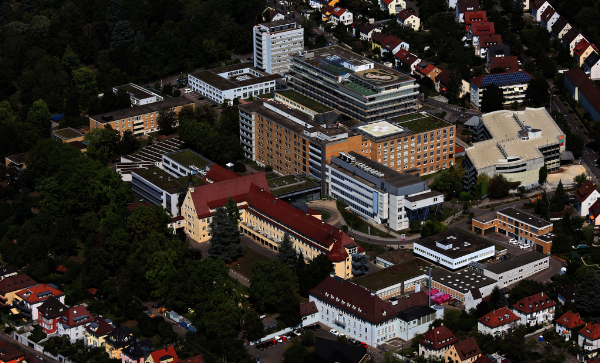
Hirschlandstraße 97
73730 Esslingen am Neckar
Phone:
0711-3103-2001
Mail:
ed.negnilsse-mukinilk@ofni
ed.negnilsse-mukinilk@ofni
ed.negnilsse-mukinilk@ofni
- Number of beds: 677
- Number of specialist departments: 21
- Number of inpatient cases: 22.514
- Number of partial inpatient cases: 287
- Number of outpatient cases: 159.438
- Number of cases of inpatient-equivalent psychiatric treatment (StäB): 48
- Hospital owners: Stadt Esslingen a.N.
- Type of provider: öffentlich
- Academic teaching hospital
- Eberhard Karls Universität Tübingen
- Innere Medizin/Schwerpunkt Geriatrie
- Klinik für Gefäß- und Thoraxchirurgie
- Klinik für Unfallchirurgie und Orthopädie - Orthopädie
- Klinik für Frauenheilkunde und Geburtshilfe
- Hals-, Nasen-, Ohrenabteilung
- Augenabteilung
- Klinik für Neurologie und klinische Neurophysiologie
- Klinik für Kinder- und Jugendpsychiatrie, Psychosomatik und Psychotherapie
- Kinder- und Jugendpsychiatrie/Tagesklinik (für teilstationäre Pflegesätze)
- Kinder- und Jugendpsychiatrie, Stationsäquivalente Behandlung in der Privatwohnung
- Klinik für Psychosomatische Medizin und Psychotherapie
- Klinik für Kardiologie, Angiologie und Pneumologie
- Klinik für diagnostische und interventionelle Radiologie und Nuklearmedizin
- Klinik für Anästhesiologie und operative Intensivmedizin
- Klinik für Allgemeine Innere Medizin, Onkologie/Hämatologie, Gastroenterologie und Infektiologie
- Klinik für Kinder und Jugendliche - Allgemeinpädiatrie
- Klinik für Kinder und Jugendliche - Neonatologie
- Klinik für Kinder und Jugendliche - Kinderchirurgie
- Klinik für Allgemein- und Viszeralchirurgie
- Allgemeine Chirurgie/Schwerpunkt Thoraxchirurgie
- Klinik für Unfallchirurgie und Orthopädie - Unfallchirurgie
Further information
| Bezeichnung | |
| Teilnahme externe Qualitätssicherung | yes |
| Bezeichnung | |
| Teilnahme externe Qualitätssicherung | yes |
| Bezeichnung | |
| Teilnahme externe Qualitätssicherung | yes |
Koronare Herzkrankheit (KHK)
| Quantity performed | 61 |
| Exception? | No exception |
| Quantity performed | 2 |
| Exception? | No exception |
| Quantity performed | 27 |
| Exception? | No exception |
| Quantity performed | 288 |
| Exception? | No exception |
| Quantity performed | 97 |
| Exception? | No exception |
| Overall result forecast presentation: | yes |
| Quantity performed reporting year: | 61 |
| Quantity forecast year: | 57 |
| Examination by state associations? | yes |
| Exemption? | yes |
| Result of the examination by the federal state authorities? | yes |
| Transitional arrangement? | no |
| Overall result forecast presentation: | no |
| Quantity performed reporting year: | 2 |
| Quantity forecast year: | 0 |
| Examination by state associations? | no |
| Exemption? | no |
| Result of the examination by the federal state authorities? | no |
| Transitional arrangement? | no |
| Overall result forecast presentation: | yes |
| Quantity performed reporting year: | 27 |
| Quantity forecast year: | 21 |
| Examination by state associations? | yes |
| Exemption? | yes |
| Result of the examination by the federal state authorities? | yes |
| Transitional arrangement? | no |
| Overall result forecast presentation: | yes |
| Quantity performed reporting year: | 288 |
| Quantity forecast year: | 255 |
| Examination by state associations? | yes |
| Exemption? | yes |
| Result of the examination by the federal state authorities? | yes |
| Transitional arrangement? | no |
| Overall result forecast presentation: | yes |
| Quantity performed reporting year: | 97 |
| Quantity forecast year: | 106 |
| Examination by state associations? | yes |
| Exemption? | yes |
| Result of the examination by the federal state authorities? | yes |
| Transitional arrangement? | no |
| No. | Explanation |
|---|---|
| CQ05 | Measures for quality assurance in the care of pre-term and full-term neonates – Perinatal Centre LEVEL 1 |
| CQ01 | Quality assurance measures for inpatient care with the indication abdominal aortic aneurysm |
| CQ25 | Measures for quality assurance in the performance of minimally invasive heart valve interventions pursuant to Article 136, para. 1, sentence 1, number 2 for hospitals licensed in accordance with Article 108 of the SGB V |
- Clarifying chat completed: no
- Clarifying chat not completed: no
- No participation in clarifying chat: no
- Notification of non-fulfilment of nursing care not made: yes
quarter Q1
Psychosomatik
| Day shift | ||
|---|---|---|
| Compliance with minimum requirements | yes | |
| Level of implementation | 112,0 % | |
| Occupational group | Minimum requirements met | Level of implementation (%) |
| Ärztinnen und Ärzte, ärztliche Psychotherapeutinnen und Psychotherapeuten | ja | 102,32 % |
| Pflegefachpersonen | ja | 135,02 % |
| Psychotherapeutinnen und Psychotherapeuten (ohne ärztliche Psychotherapeutinnen und Psychotherapeuten), Psychologinnen und Psychologen | ja | 112,79 % |
| Spezialtherapeutinnen und Spezialtherapeuten | ja | 104,05 % |
| Bewegungstherapeutinnen und Bewegungstherapeuten, Physiotherapeutinnen und Physiotherapeuten | nein | 57,08 % |
| Sozialarbeiterinnen und Sozialarbeiter, Sozialpädagoginnen und Sozialpädagogen, Heilpädagoginnen und Heilpädagogen | nein | 55,52 % |
Kinder und Jugendpsychiatrie
| Day shift | ||
|---|---|---|
| Compliance with minimum requirements | yes | |
| Level of implementation | 96,0 % | |
| Occupational group | Minimum requirements met | Level of implementation (%) |
| Ärztinnen und Ärzte, ärztliche Psychotherapeutinnen und Psychotherapeuten | ja | 123,23 % |
| Pflegefachpersonen und Erziehungsdienst | nein | 87,56 % |
| Psychotherapeutinnen und Psychotherapeuten (ohne ärztliche Psychotherapeutinnen und Psychotherapeuten), Psychologinnen und Psychologen (dazu zählen alle Kinder- und Jugendlichenpsychotherapeutinnen und -psychotherapeuten) | ja | 169,69 % |
| Spezialtherapeutinnen und Spezialtherapeuten | nein | 76,11 % |
| Bewegungstherapeutinnen und Bewegungstherapeuten, Physiotherapeutinnen und Physiotherapeuten | nein | 82,07 % |
| Sozialarbeiterinnen und Sozialarbeiter, Sozialpädagoginnen und Sozialpädagogen, Heilpädagoginnen und Heilpädagogen | nein | 72,26 % |
| Night shift | ||
| Compliance with minimum requirements | no | |
| Minimum requirement (full-time staff) | 48 | |
| Current staffing levels (full-time staff) | 51 | |
| Number of nights, subject to the minimum requirement | 86 | |
quarter Q2
Psychosomatik
| Day shift | ||
|---|---|---|
| Compliance with minimum requirements | yes | |
| Level of implementation | 117,0 % | |
| Occupational group | Minimum requirements met | Level of implementation (%) |
| Ärztinnen und Ärzte, ärztliche Psychotherapeutinnen und Psychotherapeuten | ja | 114,42 % |
| Pflegefachpersonen | ja | 142,55 % |
| Psychotherapeutinnen und Psychotherapeuten (ohne ärztliche Psychotherapeutinnen und Psychotherapeuten), Psychologinnen und Psychologen | ja | 99,31 % |
| Spezialtherapeutinnen und Spezialtherapeuten | ja | 101,4 % |
| Bewegungstherapeutinnen und Bewegungstherapeuten, Physiotherapeutinnen und Physiotherapeuten | nein | 79,68 % |
| Sozialarbeiterinnen und Sozialarbeiter, Sozialpädagoginnen und Sozialpädagogen, Heilpädagoginnen und Heilpädagogen | nein | 47,6 % |
Kinder und Jugendpsychiatrie
| Day shift | ||
|---|---|---|
| Compliance with minimum requirements | yes | |
| Level of implementation | 96,0 % | |
| Occupational group | Minimum requirements met | Level of implementation (%) |
| Ärztinnen und Ärzte, ärztliche Psychotherapeutinnen und Psychotherapeuten | ja | 149,61 % |
| Pflegefachpersonen und Erziehungsdienst | nein | 83,54 % |
| Psychotherapeutinnen und Psychotherapeuten (ohne ärztliche Psychotherapeutinnen und Psychotherapeuten), Psychologinnen und Psychologen (dazu zählen alle Kinder- und Jugendlichenpsychotherapeutinnen und -psychotherapeuten) | ja | 167,16 % |
| Spezialtherapeutinnen und Spezialtherapeuten | nein | 73,24 % |
| Bewegungstherapeutinnen und Bewegungstherapeuten, Physiotherapeutinnen und Physiotherapeuten | nein | 75,61 % |
| Sozialarbeiterinnen und Sozialarbeiter, Sozialpädagoginnen und Sozialpädagogen, Heilpädagoginnen und Heilpädagogen | nein | 78,72 % |
| Night shift | ||
| Compliance with minimum requirements | no | |
| Minimum requirement (full-time staff) | 48 | |
| Current staffing levels (full-time staff) | 52 | |
| Number of nights, subject to the minimum requirement | 83 | |
quarter Q3
Psychosomatik
| Day shift | ||
|---|---|---|
| Compliance with minimum requirements | yes | |
| Level of implementation | 117,0 % | |
| Occupational group | Minimum requirements met | Level of implementation (%) |
| Ärztinnen und Ärzte, ärztliche Psychotherapeutinnen und Psychotherapeuten | ja | 102,47 % |
| Pflegefachpersonen | ja | 150,03 % |
| Psychotherapeutinnen und Psychotherapeuten (ohne ärztliche Psychotherapeutinnen und Psychotherapeuten), Psychologinnen und Psychologen | ja | 105,18 % |
| Spezialtherapeutinnen und Spezialtherapeuten | ja | 107,58 % |
| Bewegungstherapeutinnen und Bewegungstherapeuten, Physiotherapeutinnen und Physiotherapeuten | nein | 62,93 % |
| Sozialarbeiterinnen und Sozialarbeiter, Sozialpädagoginnen und Sozialpädagogen, Heilpädagoginnen und Heilpädagogen | nein | 43,26 % |
Kinder und Jugendpsychiatrie
| Day shift | ||
|---|---|---|
| Compliance with minimum requirements | yes | |
| Level of implementation | 94,0 % | |
| Occupational group | Minimum requirements met | Level of implementation (%) |
| Ärztinnen und Ärzte, ärztliche Psychotherapeutinnen und Psychotherapeuten | ja | 133,47 % |
| Pflegefachpersonen und Erziehungsdienst | nein | 85,48 % |
| Psychotherapeutinnen und Psychotherapeuten (ohne ärztliche Psychotherapeutinnen und Psychotherapeuten), Psychologinnen und Psychologen (dazu zählen alle Kinder- und Jugendlichenpsychotherapeutinnen und -psychotherapeuten) | ja | 146,55 % |
| Spezialtherapeutinnen und Spezialtherapeuten | nein | 51,72 % |
| Bewegungstherapeutinnen und Bewegungstherapeuten, Physiotherapeutinnen und Physiotherapeuten | nein | 82,29 % |
| Sozialarbeiterinnen und Sozialarbeiter, Sozialpädagoginnen und Sozialpädagogen, Heilpädagoginnen und Heilpädagogen | ja | 94,79 % |
| Night shift | ||
| Compliance with minimum requirements | no | |
| Minimum requirement (full-time staff) | 48 | |
| Current staffing levels (full-time staff) | 52 | |
| Number of nights, subject to the minimum requirement | 90 | |
quarter Q4
Psychosomatik
| Day shift | ||
|---|---|---|
| Compliance with minimum requirements | yes | |
| Level of implementation | 117,0 % | |
| Occupational group | Minimum requirements met | Level of implementation (%) |
| Ärztinnen und Ärzte, ärztliche Psychotherapeutinnen und Psychotherapeuten | ja | 107,07 % |
| Pflegefachpersonen | ja | 141,04 % |
| Psychotherapeutinnen und Psychotherapeuten (ohne ärztliche Psychotherapeutinnen und Psychotherapeuten), Psychologinnen und Psychologen | ja | 99,56 % |
| Spezialtherapeutinnen und Spezialtherapeuten | ja | 130,4 % |
| Bewegungstherapeutinnen und Bewegungstherapeuten, Physiotherapeutinnen und Physiotherapeuten | nein | 55,21 % |
| Sozialarbeiterinnen und Sozialarbeiter, Sozialpädagoginnen und Sozialpädagogen, Heilpädagoginnen und Heilpädagogen | nein | 54,36 % |
Kinder und Jugendpsychiatrie
| Day shift | ||
|---|---|---|
| Compliance with minimum requirements | yes | |
| Level of implementation | 91,0 % | |
| Occupational group | Minimum requirements met | Level of implementation (%) |
| Ärztinnen und Ärzte, ärztliche Psychotherapeutinnen und Psychotherapeuten | ja | 135,72 % |
| Pflegefachpersonen und Erziehungsdienst | nein | 82,81 % |
| Psychotherapeutinnen und Psychotherapeuten (ohne ärztliche Psychotherapeutinnen und Psychotherapeuten), Psychologinnen und Psychologen (dazu zählen alle Kinder- und Jugendlichenpsychotherapeutinnen und -psychotherapeuten) | ja | 130,94 % |
| Spezialtherapeutinnen und Spezialtherapeuten | nein | 63,09 % |
| Bewegungstherapeutinnen und Bewegungstherapeuten, Physiotherapeutinnen und Physiotherapeuten | nein | 79,2 % |
| Sozialarbeiterinnen und Sozialarbeiter, Sozialpädagoginnen und Sozialpädagogen, Heilpädagoginnen und Heilpädagogen | ja | 93,6 % |
| Night shift | ||
| Compliance with minimum requirements | no | |
| Minimum requirement (full-time staff) | 48 | |
| Current staffing levels (full-time staff) | 51 | |
| Number of nights, subject to the minimum requirement | 84 | |
| Number | Group |
|---|---|
| 218 | Medical specialists (m/f) , psychological psychotherapists (m/f) and child and adolescent psychotherapists (m/f) who are subject to the obligation to undergo further training* |
| 118 | Number of medical specialists (m/f) from no. 1 who have completed a five-year period of further training and are therefore subject to the obligation to provide evidence |
| 113 | Number of those persons from no. 2 who have provided proof of further training according to Article 3 of the G-BA regulations |
According to Section 4 (2) of the Quality Management Guideline, facilities must provide for the prevention of and intervention in cases of violence and abuse as part of their internal quality management. The aim is to prevent, recognise and respond appropriately to abuse and violence, particularly against vulnerable patient groups such as children and adolescents or people in need of help, and also to prevent it within the facility. The respective procedure is aligned with the size of the facility, the range of services and the patients in order to define customised solutions for sensitising the teams as well as other suitable preventative and interventional measures. These may include information materials, contact addresses, training/education, codes of conduct, recommendations for action/intervention plans or comprehensive protection concepts.
- Is a protection concept in place? Yes
- Measures
-
Prevention
Information gathering on the topic
Training of employees
Education
- Last review of the measure
13.10.2023 19:54:43
Age-appropriate complaint options
Special requirements for the selection of persons
- Last review of the measure
-
Intervention
- Last review of the measure
13.10.2023 19:54:43
- Last review of the measure
-
Review
- Last review of the measure
13.10.2023 19:54:43
- Last review of the measure
-
Prevention
- Präventionskonzept sexueller Missbrauch in der Kinderklinik
- Drug commission
Training of employees on AMTS related topics
Availability of appropriate, topic-specific informational materials for patients on AMTS e.g. for chronic diseases, for high-risk drugs, for children
Stammblatt der Krankenakte/ Medikationsplan
01.08.2023
Electronic support for the admission and anamnesis process (e.g. import of patient master data or medication plans, use of a drug knowledge database, input screen for drugs or anamnesis information)
Possibility of electronic prescription i.e. structured entry of active substances (or name of the preparation), form, dose, dose frequency (e.g. in the HIS, in prescription software)
Provision of one or more electronic drug information systems (e.g. Lauer-Taxe®, ifap klinikCenter®, Gelbe Liste®, Fachinfo-Service®)
- Zubereitung durch pharmazeutisches Personal
- Anwendung von gebrauchsfertigen Arzneimitteln bzw. Zubereitungen
- Vorhandensein von elektronischen Systemen zur Entscheidungsunterstützung (z.B. Meona®, Rpdoc®, AIDKlinik®, ID Medics® bzw. ID Diacos® Pharma)
Electronic documentation of the administration of drugs
- Fallbesprechungen
- Maßnahmen zur Vermeidung von Arzneimittelverwechslung
- Teilnahme an einem einrichtungsübergreifenden Fehlermeldesystem (siehe Kapitel 12.2.3.2)
- Spezielle AMTS-Visiten (z. B. pharmazeutische Visiten, antibiotic stewardship, Ernährung)
- bei Bedarf Arzneimittel-Mitgabe oder Ausstellung von Entlassrezepten
- Admission to hospital, including anamnesis
; Instruments and measures are presented for determining the old medication (drug history), the subsequent clinical assessment and the switch to the medication available in the hospital (house list), as well as for documenting both the patient's original medication and that for hospital treatment adapted medication.
- Medication process in the hospital
In this context, the following sub-processes are assumed as examples: drug history - prescription - patient information - drug delivery - drug use - documentation - therapy monitoring - result assessment. Instruments and measures for safe medication prescription can be presented, e.g. B. in terms of readability, clarity and completeness of the documentation, but also in terms of area of application, effectiveness, benefit-risk ratio, tolerability (including potential contraindications, interactions, etc.) and resource considerations. Information can also be provided to support reliable medication ordering, delivery and use or administration.
- Discharge
In particular, the measures taken by hospitals can be presented to ensure that information on drug therapy is structured and passed on to doctors and physicians providing further treatment, as well as the appropriate provision of patients with drug information, medication plans and medications. Drug prescriptions are made.
Job
FL05 - Participation in multi-centre Phase I/II studies
Explanation
FL06 - Participation in multi-centre phase III/IV studies
Explanation
FL01 - Lectureships / teaching posts at colleges and universities
Explanation
FL03 - Student training (clinical traineeship / internship year)
Explanation
FL09 - Doctoral supervision
Explanation
Explanation
Zusammenarbeit mit dem Tübinger Patientensicherheits- und Simulationszentrum (TüPaSS) der Universitätsklinik Tübingen bei der Weiterentwicklung des CIRS PaSIS.
FL02 - Lectureships / teaching posts at universities of applied sciences
Explanation
FL07 - Initiation and management of uni-centric/multi-centric clinical/scientific studies
Explanation
Training in other healing professions
HB02 - Health and paediatric nurse (m/f)
Comment
HB01 - Nurse and health care worker (m/f)
Comment
Comment
Praktische Ausbildung in Kooperation mit VPT-Akademie Fellbach, SRH-Fachschule Stuttgart, Kolping-Bildungswerk Stuttgart
HB07 - Surgical technical assistant (m/f)
Comment
HB15 - Anaesthesia technical assistant (m/f)
Comment
HB19 - Nursing professionals
Comment
HB20 - Nursing professional B. Sc.
Comment
HB10 - Midwife (m/f)
Comment
HB13 - Medical technical assistant for functional diagnostics (MTAF) (m/f)
Comment
HB05 - Medical technical radiology assistant (MTRA) (m/f)
Comment
HB06 - Occupational therapist (m/f)
Comment
HB21 - Geriatric nurse (m/f)
Comment
- Hospital staff
- Number of pharmacists: 6
- Additional staff: 13
- Explanations: Neben den Apothekern sind Pharmazeutisch-technische Assistenten und Pharmazeutisch-kaufmännische Assistenten als auch Praktikantinnen und Praktikanten aus den jeweiligen Berufen eingesetzt.
Christa Böhm
Patientenfürsprecherin
Hirschlandstraße 97
73730 Esslingen am Neckar
Phone:
0711
-3103-2055
Mail:
ed.negnilsse-mukinilk@rehcerpsreufnetneitap
Alicia Neef
Mitarbeiterin
Hirschlandstraße 97
73730 Esslingen am Neckar
Phone:
0711
-3103-2152
Mail:
ed.negnilsse-mukinilk@feen.a
Jan Berger
Leitung Qualitätsmanagement
Hirschlandstraße 97
73730 Esslingen am Neckar
Phone:
0711
-3103-3970
Mail:
ed.negnilsse-mukinilk@regreb.j
Jana Reißner
Leiter der Krankenhausapotheke
Hirschlandstraße 97
73730 Esslingen am Neckar
Phone:
0711
-3103-2062
Mail:
ed.negnilsse-mukinilk@rendnil.ennasus
Bettina Lindenbeck
Vorsitzende der Schwerbehindertenvertretung
Hirschlandstraße 97
73730 Esslingen am Neckar
Phone:
0711
-3103-86289
Mail:
ed.negnilsse-mukinilk@zteb.h
73730 Esslingen am Neckar
Phone:
0711-3103-2001
Mail:
ed.negnilsse-mukinilk@ofni
Silke Bortenlänger
Pflegedirektorin
Hirschlandstraße 97
73730 Esslingen am Neckar
Phone:
0711
-3103-2150
Mail:
ed.negnilsse-mukinilk@regnealnetrob.s
Sylvia Schadt
Stv. Pflegedirektorin
Hirschlandstraße 97
73730 Esslingen am Neckar
Phone:
0711
-3103-2155
Mail:
ed.negnilsse-mukinilk@tdahcs.s
Michael Hedtrich
Kaufmännischer Direktor
Hirschlandstraße 97
73730 Esslingen am Neckar
Phone:
0711
-3103-2002
Mail:
ed.negnilsse-mukinilk@hcirtdeh.m
Matthias Ziegler
Geschäftsführer
Hirschlandstraße 97
73730 Esslingen am Neckar
Phone:
0711
-3103-2000
Mail:
ed.negnilsse-mukinilk@gnurheufstfeahcseg
Matthias Ziegler
Geschäftsführer
Hirschlandstraße 97
73730 Esslingen am Neckar
Phone:
0711
-3103-2000
Mail:
ed.negnilsse-mukinilk@gnurheufstfeahcseg
PD Dr. med. Dr. med. habil Alexander Koch
Ärztlicher Direktor
Hirschlandstraße 97
73730 Esslingen am Neckar
Phone:
0711
-3103-3000
Mail:
ed.negnilsse-mukinilk@hcok.a
Prof. Dr. med. Christian von Schnakenburg
Stellv. Ärztlicher Direktor
Hirschlandstraße 97
73730 Esslingen am Neckar
Phone:
0711
-3103-3501
Mail:
ed.negnilsse-mukinilk@grubnekanhcS.C
IK: 260810475
Location number: 771511000
AltersTraumaZentrum
Certified until: 01.2028
Brustkrebszentrum
Certified until: 09.2028
Chest Pain Unit
Certified until: 02.2029
Darmkrebszentrum
Certified until: 09.2028
Dysplasie-Einheit
Certified until: 05.2027
EndoProthetikZentrum
Certified until: 07.2026
Gefäßzentrum
Certified until: 03.2027
Gynäkologisches Krebszentrum
Certified until: 09.2028
Lungenkrebszentrum
Certified until: 09.2028
Onkologisches Zentrum
Certified until: 09.2028
Stroke Unit
Certified until: 09.2027
Zentrum für Adipositas- und metabolische Chirurgie
Certified until: 01.2029
Zentrum für Hämatologische Neoplasien
Certified until: 09.2028