
Helios Park-Klinikum Leipzig
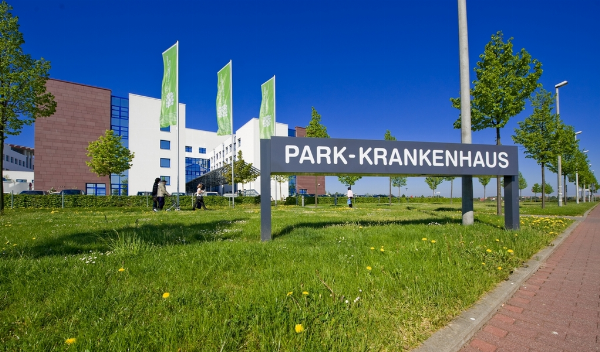
Strümpellstraße 41
04289 Leipzig
Phone:
0341-8640
Mail:
ed.nekinilk-soileh@mukinilkkrap.ofni
info.parkklinikum@helios-klini...
ed.nekinilk-soileh@mukinilkkrap.ofni
- Number of beds: 670
- Number of specialist departments: 10
- Number of inpatient cases: 12.872
- Number of partial inpatient cases: 646
- Number of outpatient cases: 24.296
- Number of cases of inpatient-equivalent psychiatric treatment (StäB): 314
- Hospital owners: Helios Park-Klinikum Leipzig GmbH
- Type of provider: privat
- Academic teaching hospital
- Universität Leipzig
- Klinik für Innere Medizin II - Gastroenterologie, Hepatologie, Hämatologie, Onkologie und Palliativmedizin ; Klinik für Innere Medizin III - Pneumologie und Kardiologie ; Klinik für Innere Medizin IV - Akutgeriatrie
- Klinik für Gefäßchirurgie ; Klinik für Interventionelle Radiologie
- Klinik für Allgemein-, Viszeral-, Thorax- und Endokrine Chirurgie
- Unfallchirurgie
- Orthopädisch-Traumatologisches Zentrum
- Klinik für Psychiatrie, Psychosomatik und Psychotherapie
- Klinik für Kinder- und Jugendpsychiatrie, Psychosomatik und Psychotherapie
- Klinik für Intensivmedizin
- Klinik für Anästhesiologie und Schmerztherapie
- Klinik für Wirbelsäulenchirurgie
Further information
- External quality assurance according to state law
No participation
Koronare Herzkrankheit (KHK)
| Quantity performed | 288 |
| Exception? | No exception |
| Quantity performed | 41 |
| Exception? | No exception |
| Quantity performed | 71 |
| Exception? | No exception |
| Overall result forecast presentation: | yes |
| Quantity performed reporting year: | 288 |
| Quantity forecast year: | 290 |
| Examination by state associations? | yes |
| Exemption? | yes |
| Result of the examination by the federal state authorities? | yes |
| Transitional arrangement? | no |
| Overall result forecast presentation: | yes |
| Quantity performed reporting year: | 41 |
| Quantity forecast year: | 41 |
| Examination by state associations? | yes |
| Exemption? | yes |
| Result of the examination by the federal state authorities? | yes |
| Transitional arrangement? | no |
| Overall result forecast presentation: | yes |
| Quantity performed reporting year: | 71 |
| Quantity forecast year: | 69 |
| Examination by state associations? | yes |
| Exemption? | yes |
| Result of the examination by the federal state authorities? | yes |
| Transitional arrangement? | no |
| No. | Explanation |
|---|---|
| CQ01 | Quality assurance measures for inpatient care with the indication abdominal aortic aneurysm |
- Clarifying chat completed: no
- Clarifying chat not completed: no
- No participation in clarifying chat: no
- Notification of non-fulfilment of nursing care not made: no
quarter Q1
Erwachsenenpsychiatrie
| Day shift | ||
|---|---|---|
| Compliance with minimum requirements | yes | |
| Level of implementation | 85,0 % | |
| Occupational group | Minimum requirements met | Level of implementation (%) |
| Ärztinnen und Ärzte, ärztliche Psychotherapeutinnen und Psychotherapeuten | ja | 106,2 % |
| Pflegefachpersonen | nein | 82,72 % |
| Psychotherapeutinnen und Psychotherapeuten (ohne ärztliche Psychotherapeutinnen und Psychotherapeuten), Psychologinnen und Psychologen | nein | 81,64 % |
| Spezialtherapeutinnen und Spezialtherapeuten | nein | 70,13 % |
| Bewegungstherapeutinnen und Bewegungstherapeuten, Physiotherapeutinnen und Physiotherapeuten | ja | 103,27 % |
| Sozialarbeiterinnen und Sozialarbeiter, Sozialpädagoginnen und Sozialpädagogen, Heilpädagoginnen und Heilpädagogen | nein | 78,7 % |
| Night shift | ||
| Compliance with minimum requirements | yes | |
| Minimum requirement (full-time staff) | 153 | |
| Current staffing levels (full-time staff) | 145 | |
| Number of nights, subject to the minimum requirement | 17 | |
Kinder und Jugendpsychiatrie
| Day shift | ||
|---|---|---|
| Compliance with minimum requirements | yes | |
| Level of implementation | 72,0 % | |
| Occupational group | Minimum requirements met | Level of implementation (%) |
| Ärztinnen und Ärzte, ärztliche Psychotherapeutinnen und Psychotherapeuten | ja | 124,32 % |
| Pflegefachpersonen und Erziehungsdienst | nein | 62,1 % |
| Psychotherapeutinnen und Psychotherapeuten (ohne ärztliche Psychotherapeutinnen und Psychotherapeuten), Psychologinnen und Psychologen (dazu zählen alle Kinder- und Jugendlichenpsychotherapeutinnen und -psychotherapeuten) | nein | 63,82 % |
| Spezialtherapeutinnen und Spezialtherapeuten | nein | 94,43 % |
| Bewegungstherapeutinnen und Bewegungstherapeuten, Physiotherapeutinnen und Physiotherapeuten | ja | 108,36 % |
| Sozialarbeiterinnen und Sozialarbeiter, Sozialpädagoginnen und Sozialpädagogen, Heilpädagoginnen und Heilpädagogen | nein | 71,98 % |
| Night shift | ||
| Compliance with minimum requirements | yes | |
| Minimum requirement (full-time staff) | 72 | |
| Current staffing levels (full-time staff) | 52 | |
| Number of nights, subject to the minimum requirement | 0 | |
quarter Q2
Erwachsenenpsychiatrie
| Day shift | ||
|---|---|---|
| Compliance with minimum requirements | yes | |
| Level of implementation | 76,0 % | |
| Occupational group | Minimum requirements met | Level of implementation (%) |
| Ärztinnen und Ärzte, ärztliche Psychotherapeutinnen und Psychotherapeuten | nein | 92,4 % |
| Pflegefachpersonen | nein | 76,91 % |
| Psychotherapeutinnen und Psychotherapeuten (ohne ärztliche Psychotherapeutinnen und Psychotherapeuten), Psychologinnen und Psychologen | nein | 68,37 % |
| Spezialtherapeutinnen und Spezialtherapeuten | nein | 58,49 % |
| Bewegungstherapeutinnen und Bewegungstherapeuten, Physiotherapeutinnen und Physiotherapeuten | nein | 93,27 % |
| Sozialarbeiterinnen und Sozialarbeiter, Sozialpädagoginnen und Sozialpädagogen, Heilpädagoginnen und Heilpädagogen | nein | 64,77 % |
| Night shift | ||
| Compliance with minimum requirements | yes | |
| Minimum requirement (full-time staff) | 174 | |
| Current staffing levels (full-time staff) | 153 | |
| Number of nights, subject to the minimum requirement | 1 | |
Kinder und Jugendpsychiatrie
| Day shift | ||
|---|---|---|
| Compliance with minimum requirements | yes | |
| Level of implementation | 66,0 % | |
| Occupational group | Minimum requirements met | Level of implementation (%) |
| Ärztinnen und Ärzte, ärztliche Psychotherapeutinnen und Psychotherapeuten | ja | 112,91 % |
| Pflegefachpersonen und Erziehungsdienst | nein | 55,4 % |
| Psychotherapeutinnen und Psychotherapeuten (ohne ärztliche Psychotherapeutinnen und Psychotherapeuten), Psychologinnen und Psychologen (dazu zählen alle Kinder- und Jugendlichenpsychotherapeutinnen und -psychotherapeuten) | nein | 64,41 % |
| Spezialtherapeutinnen und Spezialtherapeuten | nein | 80,16 % |
| Bewegungstherapeutinnen und Bewegungstherapeuten, Physiotherapeutinnen und Physiotherapeuten | ja | 97,08 % |
| Sozialarbeiterinnen und Sozialarbeiter, Sozialpädagoginnen und Sozialpädagogen, Heilpädagoginnen und Heilpädagogen | nein | 77,78 % |
| Night shift | ||
| Compliance with minimum requirements | yes | |
| Minimum requirement (full-time staff) | 108 | |
| Current staffing levels (full-time staff) | 50 | |
| Number of nights, subject to the minimum requirement | 0 | |
quarter Q3
Erwachsenenpsychiatrie
| Day shift | ||
|---|---|---|
| Compliance with minimum requirements | yes | |
| Level of implementation | 75,0 % | |
| Occupational group | Minimum requirements met | Level of implementation (%) |
| Ärztinnen und Ärzte, ärztliche Psychotherapeutinnen und Psychotherapeuten | ja | 93,03 % |
| Pflegefachpersonen | nein | 72,96 % |
| Psychotherapeutinnen und Psychotherapeuten (ohne ärztliche Psychotherapeutinnen und Psychotherapeuten), Psychologinnen und Psychologen | nein | 73,96 % |
| Spezialtherapeutinnen und Spezialtherapeuten | nein | 57,03 % |
| Bewegungstherapeutinnen und Bewegungstherapeuten, Physiotherapeutinnen und Physiotherapeuten | ja | 102,15 % |
| Sozialarbeiterinnen und Sozialarbeiter, Sozialpädagoginnen und Sozialpädagogen, Heilpädagoginnen und Heilpädagogen | nein | 70,52 % |
| Night shift | ||
| Compliance with minimum requirements | yes | |
| Minimum requirement (full-time staff) | 174 | |
| Current staffing levels (full-time staff) | 143 | |
| Number of nights, subject to the minimum requirement | 0 | |
Kinder und Jugendpsychiatrie
| Day shift | ||
|---|---|---|
| Compliance with minimum requirements | yes | |
| Level of implementation | 66,0 % | |
| Occupational group | Minimum requirements met | Level of implementation (%) |
| Ärztinnen und Ärzte, ärztliche Psychotherapeutinnen und Psychotherapeuten | ja | 100 % |
| Pflegefachpersonen und Erziehungsdienst | nein | 56 % |
| Psychotherapeutinnen und Psychotherapeuten (ohne ärztliche Psychotherapeutinnen und Psychotherapeuten), Psychologinnen und Psychologen (dazu zählen alle Kinder- und Jugendlichenpsychotherapeutinnen und -psychotherapeuten) | nein | 73,8 % |
| Spezialtherapeutinnen und Spezialtherapeuten | ja | 108,05 % |
| Bewegungstherapeutinnen und Bewegungstherapeuten, Physiotherapeutinnen und Physiotherapeuten | nein | 79,04 % |
| Sozialarbeiterinnen und Sozialarbeiter, Sozialpädagoginnen und Sozialpädagogen, Heilpädagoginnen und Heilpädagogen | nein | 67,89 % |
| Night shift | ||
| Compliance with minimum requirements | yes | |
| Minimum requirement (full-time staff) | 108 | |
| Current staffing levels (full-time staff) | 47 | |
| Number of nights, subject to the minimum requirement | 0 | |
quarter Q4
Erwachsenenpsychiatrie
| Day shift | ||
|---|---|---|
| Compliance with minimum requirements | yes | |
| Level of implementation | 74,0 % | |
| Occupational group | Minimum requirements met | Level of implementation (%) |
| Ärztinnen und Ärzte, ärztliche Psychotherapeutinnen und Psychotherapeuten | nein | 79,96 % |
| Pflegefachpersonen | nein | 75,74 % |
| Psychotherapeutinnen und Psychotherapeuten (ohne ärztliche Psychotherapeutinnen und Psychotherapeuten), Psychologinnen und Psychologen | nein | 73,09 % |
| Spezialtherapeutinnen und Spezialtherapeuten | nein | 52,9 % |
| Bewegungstherapeutinnen und Bewegungstherapeuten, Physiotherapeutinnen und Physiotherapeuten | ja | 104,94 % |
| Sozialarbeiterinnen und Sozialarbeiter, Sozialpädagoginnen und Sozialpädagogen, Heilpädagoginnen und Heilpädagogen | nein | 70,26 % |
| Night shift | ||
| Compliance with minimum requirements | yes | |
| Minimum requirement (full-time staff) | 174 | |
| Current staffing levels (full-time staff) | 136 | |
| Number of nights, subject to the minimum requirement | 0 | |
Kinder und Jugendpsychiatrie
| Day shift | ||
|---|---|---|
| Compliance with minimum requirements | yes | |
| Level of implementation | 58,0 % | |
| Occupational group | Minimum requirements met | Level of implementation (%) |
| Ärztinnen und Ärzte, ärztliche Psychotherapeutinnen und Psychotherapeuten | nein | 79,15 % |
| Pflegefachpersonen und Erziehungsdienst | nein | 49,2 % |
| Psychotherapeutinnen und Psychotherapeuten (ohne ärztliche Psychotherapeutinnen und Psychotherapeuten), Psychologinnen und Psychologen (dazu zählen alle Kinder- und Jugendlichenpsychotherapeutinnen und -psychotherapeuten) | nein | 67,45 % |
| Spezialtherapeutinnen und Spezialtherapeuten | ja | 90,9 % |
| Bewegungstherapeutinnen und Bewegungstherapeuten, Physiotherapeutinnen und Physiotherapeuten | ja | 114,9 % |
| Sozialarbeiterinnen und Sozialarbeiter, Sozialpädagoginnen und Sozialpädagogen, Heilpädagoginnen und Heilpädagogen | nein | 61,07 % |
| Night shift | ||
| Compliance with minimum requirements | yes | |
| Minimum requirement (full-time staff) | 108 | |
| Current staffing levels (full-time staff) | 43 | |
| Number of nights, subject to the minimum requirement | 0 | |
| Number | Group |
|---|---|
| 140 | Medical specialists (m/f) , psychological psychotherapists (m/f) and child and adolescent psychotherapists (m/f) who are subject to the obligation to undergo further training* |
| 113 | Number of medical specialists (m/f) from no. 1 who have completed a five-year period of further training and are therefore subject to the obligation to provide evidence |
| 76 | Number of those persons from no. 2 who have provided proof of further training according to Article 3 of the G-BA regulations |
According to Section 4 (2) of the Quality Management Guideline, facilities must provide for the prevention of and intervention in cases of violence and abuse as part of their internal quality management. The aim is to prevent, recognise and respond appropriately to abuse and violence, particularly against vulnerable patient groups such as children and adolescents or people in need of help, and also to prevent it within the facility. The respective procedure is aligned with the size of the facility, the range of services and the patients in order to define customised solutions for sensitising the teams as well as other suitable preventative and interventional measures. These may include information materials, contact addresses, training/education, codes of conduct, recommendations for action/intervention plans or comprehensive protection concepts.
- Is a protection concept in place? Yes
- Measures
-
Prevention
- Note on the measure
Aufklärung über Sozialarbeiter, Thementage, sozialtherapeutische Gruppen, Einarbeitungsmappen
- Note on the measure
Teilnahmequote konnte gesteigert werden, Fortbildungen mind. 1x jährlich in spezifischen Berufsgruppen und übergreifend, Vorliegen von Literatur und Handlungsleitfaden, Fortbildungen in Teams
- Note on the measure
Kinderschutzgruppenmitglieder übernehmen sensible Themen im Team, Sozialarbeiter in Bezug auf Angehörigen, es gibt 1 Insofa im Haus, Einarbeitungsmappen
- Note on the measure
Verhaltenskodex besteht, Konzernregelung - Institutionelles Schutzkonzept gegen sexuellen Kindesmissbrauch in allen Fachabteilungen der Helioskliniken, Interventionsplan besteht, Handlungsleitfaden Kindeswohlgefährdung, Selbstverpflichtungserklärung
- Last review of the measure
01.06.2024 20:38:33
- Note on the measure
Briefkasten, Beschwerdemanagement, es gibt ein stationsunabhängigen Ansprechpartner in Kooperation mit Klinikschule/Gesundheitsamt, Evaluationsbogen bei Behandlung
- Note on the measure
Kinderschutz in Vorstellungsgesprächen, Vorlage eines erweiterten Führungszeugnisses, Selbstverpflichtungserklärung
- Note on the measure
-
Intervention
- Note on the measure
Konzernregelung - Institutionelles Schutzkonzept gegen sexuellen Kindesmissbrauch in allen Fachabt. der Helioskliniken, Interventionsplan besteht, Handlungsleitfaden Kindeswohlgefährdung, Ablaufschema Verdacht auf Fehlverhalten, Arbeitspapier Qualitätssicherung Kinderschutz, Handreichung zur Durchführung von körperlichen Untersuchungen und Blutentnahmen von BAG kjpp, Handlungsleitfaden in Einarbeitungsmappe, Fortbildung Betriebsvereinbarung am Standort
- Last review of the measure
01.06.2024 20:38:33
- Note on the measure
-
Review
- Note on the measure
Konzernregelung - Institutionelles Schutzkonzept gegen sexuellen Kindesmissbrauch in allen Fachabteilungen der Helioskliniken, Interventionsplan besteht, Handlungsleitfaden Kindeswohlgefährdung, Ablaufschema Verdacht auf Fehlverhalten, Betriebsvereinbarung am Standort
- Last review of the measure
01.06.2024 20:38:33
- Note on the measure
-
Prevention
- Aufklärung über Sozialarbeiter, Thementage, sozialtherapeutische Gruppen, Einarbeitungsmappen
- Drug commission
Training of employees on AMTS related topics
Availability of appropriate, topic-specific informational materials for patients on AMTS e.g. for chronic diseases, for high-risk drugs, for children
Kurzanleitung AiDKlinik Bundesmedikationsplan
01.05.2018
Electronic support for the admission and anamnesis process (e.g. import of patient master data or medication plans, use of a drug knowledge database, input screen for drugs or anamnesis information)
Medikationsmanagement Benutzerhandbuch_v1.5 ; Ablaufschemata Digitale Medikation
08.01.2019
Pflegestandard Medikamente richten ; Kurzanleitung AiDKlinik Bundesmedikationsplan ; Orale Medikation Patientensicherheit ; Pflegestandard Richten und Verabreichen von Infusionen/i.v. Medikationen
01.05.2022
Possibility of electronic prescription i.e. structured entry of active substances (or name of the preparation), form, dose, dose frequency (e.g. in the HIS, in prescription software)
Provision of one or more electronic drug information systems (e.g. Lauer-Taxe®, ifap klinikCenter®, Gelbe Liste®, Fachinfo-Service®)
- Bereitstellung einer geeigneten Infrastruktur zur Sicherstellung einer fehlerfreien Zubereitung
- Zubereitung durch pharmazeutisches Personal
- Anwendung von gebrauchsfertigen Arzneimitteln bzw. Zubereitungen
- Vorhandensein von elektronischen Systemen zur Entscheidungsunterstützung (z.B. Meona®, Rpdoc®, AIDKlinik®, ID Medics® bzw. ID Diacos® Pharma)
- Anforderung von parenteralen Zytostatika Therapien: Zenzy mit Arztmodul
Electronic documentation of the administration of drugs
- Fallbesprechungen
- Maßnahmen zur Vermeidung von Arzneimittelverwechslung
- Spezielle AMTS-Visiten (z. B. pharmazeutische Visiten, antibiotic stewardship, Ernährung)
- Teilnahme an einem einrichtungsübergreifenden Fehlermeldesystem (siehe Kapitel 12.2.3.2)
- Aushändigung von arzneimittelbezogenen Informationen für die Weiterbehandlung und Anschlussversorgung der Patientin oder des Patienten im Rahmen eines (ggf. vorläufigen) Entlassbriefs
- Aushändigung des Medikationsplans
- bei Bedarf Arzneimittel-Mitgabe oder Ausstellung von Entlassrezepten
- Admission to hospital, including anamnesis
; Instruments and measures are presented for determining the old medication (drug history), the subsequent clinical assessment and the switch to the medication available in the hospital (house list), as well as for documenting both the patient's original medication and that for hospital treatment adapted medication.
- Medication process in the hospital
In this context, the following sub-processes are assumed as examples: drug history - prescription - patient information - drug delivery - drug use - documentation - therapy monitoring - result assessment. Instruments and measures for safe medication prescription can be presented, e.g. B. in terms of readability, clarity and completeness of the documentation, but also in terms of area of application, effectiveness, benefit-risk ratio, tolerability (including potential contraindications, interactions, etc.) and resource considerations. Information can also be provided to support reliable medication ordering, delivery and use or administration.
- Discharge
In particular, the measures taken by hospitals can be presented to ensure that information on drug therapy is structured and passed on to doctors and physicians providing further treatment, as well as the appropriate provision of patients with drug information, medication plans and medications. Drug prescriptions are made.
Job
Explanation
u.a. Lehrveranstaltungen an Uni Leipzig durch PD. Dr. Halm, Prof. Dr. Bartels, Prof. Dr. Stengler, PD Dr. Moche u. Dr. Kroll sowie an Uni Magdeburg durch Prof. Dr. med. Pap als APL-Prof., PD Dr. med. Meinecke an Med. Fakultät Uni Münster, Dr. Schreiter an der Staatl. Studienakademie Plauen.
Explanation
Im Rahmen unseres Lehrauftrages als akademisches Lehrkrankenhaus der Universität Leipzig bilden wir Studenten während der klinischen Semester aus. PJ Ausbildung, Untersuchungskurs Chirurgie. Außerdem regelmäßig 3 wöchige POL Kurse und UaK.
Explanation
Universität Leipzig, Zentrum für Altersmedizin Leipzig, Gerinurse Projekt, am ZSG: LeiP#netz; LIPSY; PRIMEX. Fachbereich IVR - Teilnahme an der Respect-Studie.
Explanation
PHP Studie Chemosat
Explanation
5G_eHealthSax, Digitalisierungsprojekt gefördert durch den Freistaat Sachsen durch Haushaltsmittel
Explanation
Beteiligung an wissenschaftlichen Journalen, Erstellung von wissenschaftlichen Publikationen sowie Arbeit in der Fachgruppe und in der Fachgesellschaft im Qualitätsmanagement und an Leitlinien.
Explanation
regelmäßige und kontinuierliche Promotionsbetreuung
Training in other healing professions
Comment
Die Ausbildung wird seit 2013 angeboten.
HB15 - Anaesthesia technical assistant (m/f)
Comment
Comment
Seit 01.09.2021 werden Krankenpflegehelferin/Krankenpflegehelfer am Parkklinikum ausgebildet (kooperierende Schule ist 2021 VMKB (Aus- und Weiterbildungsschulen des Vereins für Motivation, Kommunikation und berufliche Bildung).
HB19 - Nursing professionals
Comment
HB20 - Nursing professional B. Sc.
Comment
- Hospital staff
- Number of pharmacists: 7
- Additional staff: 7
- Explanations: Apotheker und pharmazeutische Mitarbeiter (PTA und Pharmazieingenieure), z. T. in Teilzeit, sind für die Versorgung von 5 Kliniken mit dazugehörigen Standorten verantwortlich
3 Ansprechpartner:innen als Patientenfürsprecher:innen werden durch den Verein Durchblick e.v. koordiniert.
Zu den Aufgaben gehören u.a. Wünsche, Beschwerden und Kritik über die medizinische, pflegerische und sonstige Versorgung im Krankenhaus aufzunehmen und diese Anliegen gegenüber dem Krankenhaus/Krankenhausträger zu vertreten.
Strümpellstraße 41
04289 Leipzig
Phone:
0341
-140-6140
Mail:
ed.ve-kcilbhcrud@nierev
Julian Zimmer
Klinikgeschäftsführer
Strümpellstraße 41
04289 Leipzig
Phone:
0341
-864-2100
Mail:
ed.tiehdnuseg-soileh@mukinilkkrap.ofni
Matthias Hirsekorn
Klinikgeschäftsführer
Strümpellstraße 41
04289 Leipzig
Phone:
0341
-865-1401
Mail:
ed.tiehdnuseg-soileh@mukinilkkrap.ofni
Julian Zimmer
Klinikgeschäftsführer
Strümpellstraße 41
04289 Leipzig
Phone:
0341
-864-2100
Mail:
ed.tiehdnuseg-soileh@mukinilkkrap.ofni
Barbara Wand
Leitung Sozialdienst
Strümpellstraße 41
04289 Leipzig
Phone:
0341
-865-256281
Mail:
ed.tiehdnuseg-soileh@dnaw.arabrab
04289 Leipzig
Phone:
0341-8640
Mail:
ed.nekinilk-soileh@mukinilkkrap.ofni
Sebastian Hunger
Pflegedirektor / Bereichsleitung Somatik
Strümpellstraße 41
04289 Leipzig
Phone:
0341
-864-252320
Mail:
ed.tiehdnuseg-soileh@regnuh.naitsabes
Julia Baß
Stellv. Pflegedirektorin / Bereichsleitung Psychiatrie
Strümpellstraße 41
04289 Leipzig
Phone:
0341
-864-253631
Mail:
ed.tiehdnuseg-soileh@ssab.ailuj
Julian Zimmer
Klinikgeschäftsführer
Strümpellstraße 41
04289 Leipzig
Phone:
0341
-864-2100
Mail:
ed.tiehdnuseg-soileh@mukinilkkrap.ofni
Matthias Hirsekorn
Klinikgeschäftsführer
Strümpellstraße 41
04289 Leipzig
Phone:
0341
-865-1401
Mail:
ed.tiehdnuseg-soileh@murtnezzreh.ofni
Julian Zimmer
Klinikgeschäftsführer
Strümpellstraße 41
04289 Leipzig
Phone:
0341
-864-2100
Mail:
ed.tiehdnuseg-soileh@mukinilkkrap.ofni
Prof. Dr. med. Géza Pap
Ärztlicher Direktor
Strümpellstraße 41
04289 Leipzig
Phone:
0341
-864-2279
Mail:
ed.tiehdnuseg-soileh@pap.azeg
IK: 261400847
Location number: 771139000