
Universitätsklinikum Würzburg
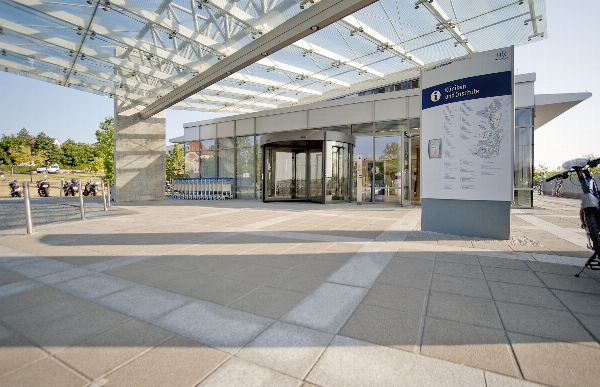
Oberdürrbacher Straße 6
97080 Würzburg
Phone:
0931-201-0
Mail:
ed.wku@ofni
ed.wku@ofni
ed.wku@ofni
The University Hospital Würzburg is the only supramaximal care hospital in the Lower Franconia region to cover a catchment area with over one million inhabitants....
more- Number of beds: 1.460
- Number of specialist departments: 27
- Number of inpatient cases: 60.989
- Number of partial inpatient cases: 13.600
- Number of outpatient cases: 629.089
- Hospital owners: Universitätsklinikum Würzburg, Anstalt des öffentlichen Rechts
- Type of provider: öffentlich
- University Hospital
- Klinik und Poliklinik für Anästhesiologie, Intensivmedizin, Notfallmedizin und Schmerztherapie
- Institut für Klinische Transfusionsmedizin und Hämotherapie
- Zentrallabor - Gerinnungsambulanz
- Augenklinik und Poliklinik
- Klinik und Poliklinik für Hals-Nasen-Ohrenheilkunde, Kopf- und Hals-Chirurgie
- Neurochirurgische Klinik und Poliklinik
- Neurologische Klinik und Poliklinik
- Klinik und Poliklinik für Strahlentherapie und Radioonkologie/ Interdisziplinäres Zentrum Palliativmedizin
- Institut für Diagnostische und Interventionelle Neuroradiologie
- Frauenklinik und Poliklinik
- Klinik und Poliklinik für Dermatologie, Venerologie und Allergologie
- Klinik und Poliklinik für Allgemein-, Viszeral-, Transplantations-, Gefäß- und Kinderchirurgie (Chirurgische Klinik I)
- Kinderklinik und Poliklinik
- Klinik und Poliklinik für Psychiatrie, Psychosomatik und Psychotherapie
- Klinik und Poliklinik für Kinder- und Jugendpsychiatrie, Psychosomatik und Psychotherapie
- Klinik und Poliklinik für Mund-, Kiefer- und Plastische Gesichtschirurgie, Kopf- und Hals-Chirurgie
- Poliklinik für Kieferorthopädie
- Poliklinik für Zahnärztliche Prothetik
- Poliklinik für Zahnerhaltung und Parodontologie
- Abteilung für Parodontologie
- Klinik und Poliklinik für Unfall-, Hand-, Plastische und Wiederherstellungschirurgie (Chirurgische Klinik II)
- Klinik und Poliklinik für Thorax-, Herz- und Thorakale Gefäßchirurgie
- Klinik und Poliklinik für Urologie und Kinderurologie
- Medizinische Klinik und Poliklinik I
- Medizinische Klinik und Poliklinik II
- Klinik und Poliklinik für Nuklearmedizin
- Institut für Diagnostische und Interventionelle Radiologie
Further information
| Bezeichnung | |
| Teilnahme externe Qualitätssicherung | yes |
Chronische obstruktive Lungenerkrankung (COPD)
Teilnahme der Kinderklinik und Poliklinik
| Quantity performed | 91 |
| Exception? | No exception |
| Quantity performed | 357 |
| Exception? | No exception |
| Quantity performed | 46 |
| Exception? | No exception |
| Quantity performed | 82 |
| Exception? | No exception |
| Quantity performed | 25 |
| Exception? | No exception |
| Quantity performed | 48 |
| Exception? | No exception |
| Quantity performed | 85 |
| Exception? | No exception |
| Quantity performed | 44 |
| Exception? | No exception |
| Overall result forecast presentation: | yes |
| Quantity performed reporting year: | 91 |
| Quantity forecast year: | 86 |
| Examination by state associations? | yes |
| Exemption? | yes |
| Result of the examination by the federal state authorities? | yes |
| Transitional arrangement? | no |
| Overall result forecast presentation: | yes |
| Quantity performed reporting year: | 357 |
| Quantity forecast year: | 406 |
| Examination by state associations? | yes |
| Exemption? | yes |
| Result of the examination by the federal state authorities? | yes |
| Transitional arrangement? | no |
| Overall result forecast presentation: | yes |
| Quantity performed reporting year: | 46 |
| Quantity forecast year: | 43 |
| Examination by state associations? | yes |
| Exemption? | yes |
| Result of the examination by the federal state authorities? | yes |
| Transitional arrangement? | no |
| Overall result forecast presentation: | yes |
| Quantity performed reporting year: | 82 |
| Quantity forecast year: | 91 |
| Examination by state associations? | yes |
| Exemption? | yes |
| Result of the examination by the federal state authorities? | yes |
| Transitional arrangement? | no |
| Overall result forecast presentation: | yes |
| Quantity performed reporting year: | 25 |
| Quantity forecast year: | 24 |
| Examination by state associations? | yes |
| Exemption? | yes |
| Result of the examination by the federal state authorities? | yes |
| Transitional arrangement? | no |
| Overall result forecast presentation: | yes |
| Quantity performed reporting year: | 48 |
| Quantity forecast year: | 52 |
| Examination by state associations? | yes |
| Exemption? | yes |
| Result of the examination by the federal state authorities? | yes |
| Transitional arrangement? | no |
| Overall result forecast presentation: | yes |
| Quantity performed reporting year: | 85 |
| Quantity forecast year: | 81 |
| Examination by state associations? | yes |
| Exemption? | yes |
| Result of the examination by the federal state authorities? | yes |
| Transitional arrangement? | no |
| Overall result forecast presentation: | yes |
| Quantity performed reporting year: | 44 |
| Quantity forecast year: | 54 |
| Examination by state associations? | yes |
| Exemption? | yes |
| Result of the examination by the federal state authorities? | yes |
| Transitional arrangement? | no |
| No. | Explanation |
|---|---|
| CQ01 | Quality assurance measures for inpatient care with the indication abdominal aortic aneurysm |
| CQ02 | Quality assurance measures for the inpatient care of children and adolescents with haemato-oncological diseases |
| CQ03 | Quality assurance measures for the implementation of positron emission tomography (PET) in hospitals for the indications non-small-cell lung cancer (NSCLC) and solid pulmonary nodules |
| CQ05 | Measures for quality assurance in the care of pre-term and full-term neonates – Perinatal Centre LEVEL 1 |
| CQ24 | Quality assurance measures for allogeneic stem cell transplantation for multiple myeloma (valid until 30 June 2022) |
| CQ25 | Measures for quality assurance in the performance of minimally invasive heart valve interventions pursuant to Article 136, para. 1, sentence 1, number 2 for hospitals licensed in accordance with Article 108 of the SGB V |
| CQ28 | Guideline on quality assurance measures for liposuction procedures for stage III lipedema (QS-RL Liposuction) |
| CQ30 | Quality assurance guideline for interstitial LDR brachytherapy for low-risk localized prostate cancer (effective January 8, 2021). |
| CQ27 | Guideline on quality assurance measures for inpatient care with bronchoscopic lung volume reduction procedures for severe emphysema (QS Guideline bronchoscopic LVR /QS-RL BLVR) |
| CQ29 | Measures for quality assurance of allogeneic stem cell transplantation with in-vitro processing (T-cell depletion via positive enrichment or negative selection) of the transplant in acute lymphoblastic leukaemia (ALL) and acute myeloid leukaemia (AML) in adults |
| CQ31 | Guideline for the care of proximal femur fractures (QSFFx-RL) |
- Clarifying chat completed: no
- Clarifying chat not completed: no
- No participation in clarifying chat: no
- Notification of non-fulfilment of nursing care not made: yes
quarter Q1
Erwachsenenpsychiatrie
| Day shift | ||
|---|---|---|
| Compliance with minimum requirements | yes | |
| Level of implementation | 99,0 % | |
| Occupational group | Minimum requirements met | Level of implementation (%) |
| Ärztinnen und Ärzte, ärztliche Psychotherapeutinnen und Psychotherapeuten | nein | 84,81 % |
| Pflegefachpersonen | ja | 105,25 % |
| Psychotherapeutinnen und Psychotherapeuten (ohne ärztliche Psychotherapeutinnen und Psychotherapeuten), Psychologinnen und Psychologen | nein | 85,39 % |
| Spezialtherapeutinnen und Spezialtherapeuten | ja | 95,51 % |
| Bewegungstherapeutinnen und Bewegungstherapeuten, Physiotherapeutinnen und Physiotherapeuten | ja | 95,53 % |
| Sozialarbeiterinnen und Sozialarbeiter, Sozialpädagoginnen und Sozialpädagogen, Heilpädagoginnen und Heilpädagogen | ja | 95,49 % |
| Night shift | ||
| Compliance with minimum requirements | yes | |
| Minimum requirement (full-time staff) | 96 | |
| Current staffing levels (full-time staff) | 94 | |
| Number of nights, subject to the minimum requirement | 40 | |
Kinder und Jugendpsychiatrie
| Day shift | ||
|---|---|---|
| Compliance with minimum requirements | no | |
| Level of implementation | 126,0 % | |
| Occupational group | Minimum requirements met | Level of implementation (%) |
| Ärztinnen und Ärzte, ärztliche Psychotherapeutinnen und Psychotherapeuten | ja | 255,52 % |
| Pflegefachpersonen und Erziehungsdienst | ja | 109,55 % |
| Psychotherapeutinnen und Psychotherapeuten (ohne ärztliche Psychotherapeutinnen und Psychotherapeuten), Psychologinnen und Psychologen (dazu zählen alle Kinder- und Jugendlichenpsychotherapeutinnen und -psychotherapeuten) | ja | 147,56 % |
| Spezialtherapeutinnen und Spezialtherapeuten | ja | 100,09 % |
| Bewegungstherapeutinnen und Bewegungstherapeuten, Physiotherapeutinnen und Physiotherapeuten | ja | 95,53 % |
| Sozialarbeiterinnen und Sozialarbeiter, Sozialpädagoginnen und Sozialpädagogen, Heilpädagoginnen und Heilpädagogen | ja | 139,45 % |
| Night shift | ||
| Compliance with minimum requirements | yes | |
| Minimum requirement (full-time staff) | 61 | |
| Current staffing levels (full-time staff) | 47 | |
| Number of nights, subject to the minimum requirement | 4 | |
quarter Q2
Erwachsenenpsychiatrie
| Day shift | ||
|---|---|---|
| Compliance with minimum requirements | yes | |
| Level of implementation | 97,0 % | |
| Occupational group | Minimum requirements met | Level of implementation (%) |
| Ärztinnen und Ärzte, ärztliche Psychotherapeutinnen und Psychotherapeuten | nein | 89,61 % |
| Pflegefachpersonen | ja | 107,95 % |
| Psychotherapeutinnen und Psychotherapeuten (ohne ärztliche Psychotherapeutinnen und Psychotherapeuten), Psychologinnen und Psychologen | nein | 71,15 % |
| Spezialtherapeutinnen und Spezialtherapeuten | nein | 61,17 % |
| Bewegungstherapeutinnen und Bewegungstherapeuten, Physiotherapeutinnen und Physiotherapeuten | ja | 175,06 % |
| Sozialarbeiterinnen und Sozialarbeiter, Sozialpädagoginnen und Sozialpädagogen, Heilpädagoginnen und Heilpädagogen | nein | 65 % |
| Night shift | ||
| Compliance with minimum requirements | yes | |
| Minimum requirement (full-time staff) | 96 | |
| Current staffing levels (full-time staff) | 97 | |
| Number of nights, subject to the minimum requirement | 52 | |
Kinder und Jugendpsychiatrie
| Day shift | ||
|---|---|---|
| Compliance with minimum requirements | yes | |
| Level of implementation | 113,0 % | |
| Occupational group | Minimum requirements met | Level of implementation (%) |
| Ärztinnen und Ärzte, ärztliche Psychotherapeutinnen und Psychotherapeuten | ja | 223,27 % |
| Pflegefachpersonen und Erziehungsdienst | ja | 104,72 % |
| Psychotherapeutinnen und Psychotherapeuten (ohne ärztliche Psychotherapeutinnen und Psychotherapeuten), Psychologinnen und Psychologen (dazu zählen alle Kinder- und Jugendlichenpsychotherapeutinnen und -psychotherapeuten) | ja | 97,25 % |
| Spezialtherapeutinnen und Spezialtherapeuten | nein | 72,29 % |
| Bewegungstherapeutinnen und Bewegungstherapeuten, Physiotherapeutinnen und Physiotherapeuten | nein | 86,96 % |
| Sozialarbeiterinnen und Sozialarbeiter, Sozialpädagoginnen und Sozialpädagogen, Heilpädagoginnen und Heilpädagogen | nein | 88,93 % |
| Night shift | ||
| Compliance with minimum requirements | yes | |
| Minimum requirement (full-time staff) | 61 | |
| Current staffing levels (full-time staff) | 47 | |
| Number of nights, subject to the minimum requirement | 5 | |
quarter Q3
Erwachsenenpsychiatrie
| Day shift | ||
|---|---|---|
| Compliance with minimum requirements | yes | |
| Level of implementation | 101,0 % | |
| Occupational group | Minimum requirements met | Level of implementation (%) |
| Ärztinnen und Ärzte, ärztliche Psychotherapeutinnen und Psychotherapeuten | ja | 90,05 % |
| Pflegefachpersonen | ja | 111,18 % |
| Psychotherapeutinnen und Psychotherapeuten (ohne ärztliche Psychotherapeutinnen und Psychotherapeuten), Psychologinnen und Psychologen | nein | 62,37 % |
| Spezialtherapeutinnen und Spezialtherapeuten | ja | 90,5 % |
| Bewegungstherapeutinnen und Bewegungstherapeuten, Physiotherapeutinnen und Physiotherapeuten | ja | 93,79 % |
| Sozialarbeiterinnen und Sozialarbeiter, Sozialpädagoginnen und Sozialpädagogen, Heilpädagoginnen und Heilpädagogen | ja | 90,51 % |
| Night shift | ||
| Compliance with minimum requirements | yes | |
| Minimum requirement (full-time staff) | 96 | |
| Current staffing levels (full-time staff) | 98 | |
| Number of nights, subject to the minimum requirement | 64 | |
Kinder und Jugendpsychiatrie
| Day shift | ||
|---|---|---|
| Compliance with minimum requirements | no | |
| Level of implementation | 114,0 % | |
| Occupational group | Minimum requirements met | Level of implementation (%) |
| Ärztinnen und Ärzte, ärztliche Psychotherapeutinnen und Psychotherapeuten | ja | 180,68 % |
| Pflegefachpersonen und Erziehungsdienst | ja | 111,04 % |
| Psychotherapeutinnen und Psychotherapeuten (ohne ärztliche Psychotherapeutinnen und Psychotherapeuten), Psychologinnen und Psychologen (dazu zählen alle Kinder- und Jugendlichenpsychotherapeutinnen und -psychotherapeuten) | ja | 101,56 % |
| Spezialtherapeutinnen und Spezialtherapeuten | ja | 90,5 % |
| Bewegungstherapeutinnen und Bewegungstherapeuten, Physiotherapeutinnen und Physiotherapeuten | ja | 90,52 % |
| Sozialarbeiterinnen und Sozialarbeiter, Sozialpädagoginnen und Sozialpädagogen, Heilpädagoginnen und Heilpädagogen | ja | 90,42 % |
| Night shift | ||
| Compliance with minimum requirements | yes | |
| Minimum requirement (full-time staff) | 61 | |
| Current staffing levels (full-time staff) | 48 | |
| Number of nights, subject to the minimum requirement | 6 | |
quarter Q4
Erwachsenenpsychiatrie
| Day shift | ||
|---|---|---|
| Compliance with minimum requirements | no | |
| Level of implementation | 106,0 % | |
| Occupational group | Minimum requirements met | Level of implementation (%) |
| Ärztinnen und Ärzte, ärztliche Psychotherapeutinnen und Psychotherapeuten | ja | 113,16 % |
| Pflegefachpersonen | ja | 109,97 % |
| Psychotherapeutinnen und Psychotherapeuten (ohne ärztliche Psychotherapeutinnen und Psychotherapeuten), Psychologinnen und Psychologen | ja | 90,51 % |
| Spezialtherapeutinnen und Spezialtherapeuten | ja | 90,49 % |
| Bewegungstherapeutinnen und Bewegungstherapeuten, Physiotherapeutinnen und Physiotherapeuten | ja | 132,42 % |
| Sozialarbeiterinnen und Sozialarbeiter, Sozialpädagoginnen und Sozialpädagogen, Heilpädagoginnen und Heilpädagogen | ja | 90,5 % |
| Night shift | ||
| Compliance with minimum requirements | yes | |
| Minimum requirement (full-time staff) | 96 | |
| Current staffing levels (full-time staff) | 96 | |
| Number of nights, subject to the minimum requirement | 58 | |
Kinder und Jugendpsychiatrie
| Day shift | ||
|---|---|---|
| Compliance with minimum requirements | no | |
| Level of implementation | 133,0 % | |
| Occupational group | Minimum requirements met | Level of implementation (%) |
| Ärztinnen und Ärzte, ärztliche Psychotherapeutinnen und Psychotherapeuten | ja | 204,86 % |
| Pflegefachpersonen und Erziehungsdienst | ja | 132,69 % |
| Psychotherapeutinnen und Psychotherapeuten (ohne ärztliche Psychotherapeutinnen und Psychotherapeuten), Psychologinnen und Psychologen (dazu zählen alle Kinder- und Jugendlichenpsychotherapeutinnen und -psychotherapeuten) | ja | 118,8 % |
| Spezialtherapeutinnen und Spezialtherapeuten | ja | 90,51 % |
| Bewegungstherapeutinnen und Bewegungstherapeuten, Physiotherapeutinnen und Physiotherapeuten | ja | 90,57 % |
| Sozialarbeiterinnen und Sozialarbeiter, Sozialpädagoginnen und Sozialpädagogen, Heilpädagoginnen und Heilpädagogen | ja | 90,43 % |
| Night shift | ||
| Compliance with minimum requirements | yes | |
| Minimum requirement (full-time staff) | 61 | |
| Current staffing levels (full-time staff) | 47 | |
| Number of nights, subject to the minimum requirement | 1 | |
| Number | Group |
|---|---|
| 634 | Medical specialists (m/f) , psychological psychotherapists (m/f) and child and adolescent psychotherapists (m/f) who are subject to the obligation to undergo further training* |
| 64 | Number of medical specialists (m/f) from no. 1 who have completed a five-year period of further training and are therefore subject to the obligation to provide evidence |
| 60 | Number of those persons from no. 2 who have provided proof of further training according to Article 3 of the G-BA regulations |
According to Section 4 (2) of the Quality Management Guideline, facilities must provide for the prevention of and intervention in cases of violence and abuse as part of their internal quality management. The aim is to prevent, recognise and respond appropriately to abuse and violence, particularly against vulnerable patient groups such as children and adolescents or people in need of help, and also to prevent it within the facility. The respective procedure is aligned with the size of the facility, the range of services and the patients in order to define customised solutions for sensitising the teams as well as other suitable preventative and interventional measures. These may include information materials, contact addresses, training/education, codes of conduct, recommendations for action/intervention plans or comprehensive protection concepts.
- Is a protection concept in place? Yes
- Measures
-
Prevention
Information gathering on the topic
Training of employees
Education
- Last review of the measure
01.01.2023 18:11:34
Age-appropriate complaint options
- Note on the measure
Vorlage eines erweiterten Führungszeugnisses bei Einstellung von Personal, das mit Kindern und Jugendlichen arbeitet.
- Last review of the measure
-
Intervention
- Last review of the measure
01.01.2023 18:11:34
- Last review of the measure
-
Review
- Last review of the measure
01.01.2023 18:11:34
- Last review of the measure
-
Prevention
- Vorlage eines erweiterten Führungszeugnisses bei Einstellung von Personal, das mit Kindern und Jugendlichen arbeitet.
- Drug commission
Training of employees on AMTS related topics
Availability of appropriate, topic-specific informational materials for patients on AMTS e.g. for chronic diseases, for high-risk drugs, for children
im QM-Dokumentenlenkungssystem
01.01.2024
Electronic support for the admission and anamnesis process (e.g. import of patient master data or medication plans, use of a drug knowledge database, input screen for drugs or anamnesis information)
im QM-Dokumentenlenkungssystem
01.01.2024
im QM-Dokumentenlenkungssystem
01.01.2024
Possibility of electronic prescription i.e. structured entry of active substances (or name of the preparation), form, dose, dose frequency (e.g. in the HIS, in prescription software)
Provision of one or more electronic drug information systems (e.g. Lauer-Taxe®, ifap klinikCenter®, Gelbe Liste®, Fachinfo-Service®)
- Bereitstellung einer geeigneten Infrastruktur zur Sicherstellung einer fehlerfreien Zubereitung
- Zubereitung durch pharmazeutisches Personal
- Anwendung von gebrauchsfertigen Arzneimitteln bzw. Zubereitungen
- Vorhandensein von elektronischen Systemen zur Entscheidungsunterstützung (z.B. Meona®, Rpdoc®, AIDKlinik®, ID Medics® bzw. ID Diacos® Pharma)
- Versorgung der Patientinnen und Patienten mit patientenindividuell abgepackten Arzneimitteln durch die Krankenhausapotheke (z.B. Unit-Dose-System)
- Zenzy, Steribase, SAP-online-Bestellung
Electronic documentation of the administration of drugs
- Fallbesprechungen
- Maßnahmen zur Vermeidung von Arzneimittelverwechslung
- Spezielle AMTS-Visiten (z. B. pharmazeutische Visiten, antibiotic stewardship, Ernährung)
- Aushändigung von Patienteninformationen zur Umsetzung von Therapieempfehlungen
- Aushändigung des Medikationsplans
- bei Bedarf Arzneimittel-Mitgabe oder Ausstellung von Entlassrezepten
- Admission to hospital, including anamnesis
; Instruments and measures are presented for determining the old medication (drug history), the subsequent clinical assessment and the switch to the medication available in the hospital (house list), as well as for documenting both the patient's original medication and that for hospital treatment adapted medication.
- Medication process in the hospital
In this context, the following sub-processes are assumed as examples: drug history - prescription - patient information - drug delivery - drug use - documentation - therapy monitoring - result assessment. Instruments and measures for safe medication prescription can be presented, e.g. B. in terms of readability, clarity and completeness of the documentation, but also in terms of area of application, effectiveness, benefit-risk ratio, tolerability (including potential contraindications, interactions, etc.) and resource considerations. Information can also be provided to support reliable medication ordering, delivery and use or administration.
- Discharge
In particular, the measures taken by hospitals can be presented to ensure that information on drug therapy is structured and passed on to doctors and physicians providing further treatment, as well as the appropriate provision of patients with drug information, medication plans and medications. Drug prescriptions are made.
Job
FL01 - Lectureships / teaching posts at colleges and universities
Explanation
FL03 - Student training (clinical traineeship / internship year)
Explanation
FL04 - Project-related cooperation with colleges and universities
Explanation
FL05 - Participation in multi-centre Phase I/II studies
Explanation
FL06 - Participation in multi-centre phase III/IV studies
Explanation
FL07 - Initiation and management of uni-centric/multi-centric clinical/scientific studies
Explanation
FL08 - Editors of scientific journals/textbooks
Explanation
FL09 - Doctoral supervision
Explanation
Training in other healing professions
Comment
Staatliche Berufsfachschule für Physiotherapie mit 72 Ausbildungsplätzen. Darüber hinaus werden an der Staatlichen Berufsfachschule für Massage 52 Ausbildungsplätze angeboten. Weitere Informationen unter https://www.ukw.de/karriere/
Comment
Staatliche Berufsfachschule für Technische Assistenten in der Medizin (zur Universität gehörend) zur Ausbildung zu Medizinische Technologinnen und Technologen für Radiologie (MTR) Weitere Informationen unter https://www.ukw.de/karriere/
Comment
Wir bieten an der Berufsfachschule für Anästhesie- und Operationstechnische Assistenz des Uniklinikums eine dreijährige Ausbildung in Vollzeit an, die alle relevanten Inhalte in Theorie und Praxis vermittelt. Es besteht ein Ausbildungsverbund mit Kliniken der Region. https://www.ukw.de/karriere/
Comment
In Kooperation mit der Univ. Würzburg wird der duale Bachelorstudiengang Hebammenwissenschaft angeboten. Weitere Informationen unter https://www.ukw.de/karriere
Comment
Staatliche Berufsfachschule für Technische Assistenten in der Medizin (zur Universität gehörend) zur Ausbildung zu Medizinische Technologinnen und Technologen für Laboratoriums Analytik (MTL) Weitere Informationen unter https://www.ukw.de/karriere
Comment
Wir bieten an der Berufsfachschule für Anästhesie- und Operationstechnische Assistenz des Uniklinikums eine dreijährige Ausbildung in Vollzeit an, die alle relevanten Inhalte in Theorie und Praxis vermittelt. Weitere Informationen unter https://www.ukw.de/karriere/
Comment
Staatliche Berufsfachschule für Diätassistenten mit 3-jähriger Ausbildung. In Kooperation mit der Hochschule Fulda ist außerdem ein Duales Studium B. Sc. Diätetik möglich. Weitere Informationen unter https://www.ukw.de/karriere
Comment
Staatliche Berufsfachschule für Pflege. Ausbildung zur Pflegefachfrau oder zum Pflegefachmann mit der Vertiefung "Pflege am Kind" oder "Pflege am Erwachsenen". EU-weit anerkannt. Weitere Informationen unter: https://www.ukw.de/karriere/
- Hospital staff
- Number of pharmacists: 20
- Additional staff: 35
- Explanations: Anzahl Personen
Brigitte Paul
Patientenfürsprecherin
Oberdürrbacher Straße 6
97080 Würzburg
Phone:
0931
-201-55078
Mail:
ed.wku@rehcerpsreufnetneitaP
Albert Fischer
Patientenfürsprecher
Oberdürrbacher Straße 6
97080 Würzburg
Phone:
0931
-201-55078
Mail:
ed.wku@rehcerpsreufnetneitaP
Susanne Berninger
Leitung Lob- und Beschwerdemanagement
Oberdürrbacher Straße 6
97080 Würzburg
Phone:
0931
-201-59443
Mail:
ed.wku@edrewhcseB
Dr. med. Gerhard Schwarzmann
QMB Gesamtklinikum
Oberdürrbacher Straße 6
97080 Würzburg
Phone:
0931
-201-59441
Mail:
ed.wku@G_namzrawhcS
Dr. Mareike Kunkel
Leiterin der Apotheke
Oberdürrbacher Straße 6
97080 Würzburg
Phone:
0931
-201-53901
Mail:
ed.wku@1M_leknuK
Dipl.-Soz.-Päd. Gabriele Nelkenstock
Selbsthilfebeauftragte
Oberdürrbacher Straße 6
97080 Würzburg
Phone:
0931
-880-79447
Mail:
ed.wku@eflihtsbleS
97080 Würzburg
Phone:
0931-201-0
Mail:
ed.wku@ofni
Marcus Huppertz
Pflegedirektor
Oberdürrbacher Straße 6
97080 Würzburg
Phone:
0931
-201-57102
Mail:
ed.wku@noitkeridegelfP
Philip Rieger
Kaufmännischer Direktor
Oberdürrbacher Straße 6
97080 Würzburg
Phone:
0931
-201-55501
Mail:
ed.wku@P_regeiR
Dr. Ulf Dennler
Leiter der Stabsstelle medizinisches Qualitäts-, Risiko- und Datenmanagement
Oberdürrbacher Straße 6
97080 Würzburg
Phone:
0931
-201-54506
Mail:
ed.wku@U_relnneD
Prof. Dr. med. Tim von Oertzen
Ärztlicher Direktor
Oberdürrbacher Straße 6
97080 Würzburg
Phone:
0931
-201-55001
Mail:
ed.wku@noitkeriD-ehciltzreA
IK: 260960079
Location number: 773642000
- https://www.ukw.de Startseite der Homepage
Chest Pain Unit
Certified until: 03.2028
Chirurgische Behandlung von bösartigen Erkrankungen des Peritoneums
Certified until: 10.2026
Cochlea-Implantat versorgende Einrichtung
Certified until: 06.2026
Dysplasie-Einheit
Certified until: 10.2027
Harnblasenkrebszentrum
Certified until: 06.2026
Intensivmedizin Schwerpunktversorgung
Certified until: 09.2028
MUKOzert
Certified until: 07.2027
Nephrologische Schwerpunktabteilung
Certified until: 03.2028
Nephrologische Schwerpunktklinik
Certified until: 03.2028
Nierenkrebszentrum
Certified until: 06.2026
Prostatakrebszentrum
Certified until: 06.2026
Schlaflabor
Certified until: 12.2027
TraumaNetzwerk
Certified until: 11.2026
TraumaZentrum
Certified until: 11.2026
Zentren für Seltene Erkrankungen
Certified until: 02.2028
Zentrum für Nierentransplantation
Certified until: 03.2028
Zentrum für Personalisierte Medizin
Certified until: 06.2027